A Stampede of Common Dolphins!
By Lloyd Edwards
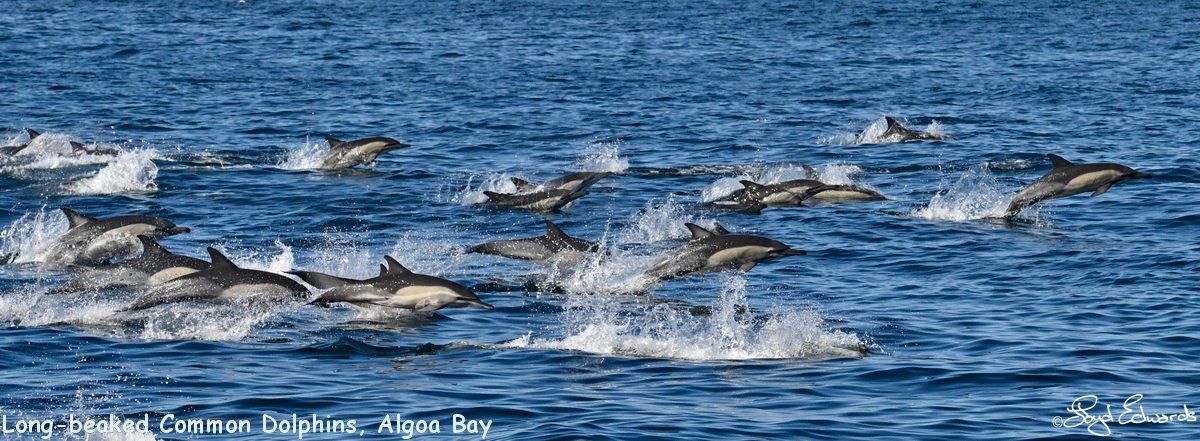
Sunday, 15th March 2026On a recent cruise to the Addo Canyons, we were surprised to see 3 extremely large schools of Long-beaked common dolphins, the last one around 5000 strong and 40km offshore. The South African population has been estimated at 20k, but I am sure this is too low.
The reason I say this, is because on the same day, marine operators have reported them off Kenton-on-Sea, Algoa Bay, Cape St Francis, Mossel Bay and False Bay. Schools far out to sea would not have been spotted from ariel surveys. They are the most common cetacean in our oceans, with a global population of 6 million.
Many other predators follow common dolphins, as they are the ones that round up fish into so called static “bait balls”. This makes the fish much easier to feed on and puts them at the surface in reach of diving birds. Sharks, seals and Bryde’s whales make short work of what is left over.
From birth the calves start learning what is called a signature whistle. It takes them around a year to master and then it remains the same. Each one is different, although they are divided into 29 types. It is thought they act as a name or help with group cohesion and locating lost individuals.
These animals are rarely encountered close to shore. If they are seen, it will be in fast moving groups with plenty of white water being thrown into the air. Deep-sea dwellers become disorientated on shallow sloping sandy beaches. There have been some mass strandings over the years, along the beach between Sunday’s river and Woody Cape.
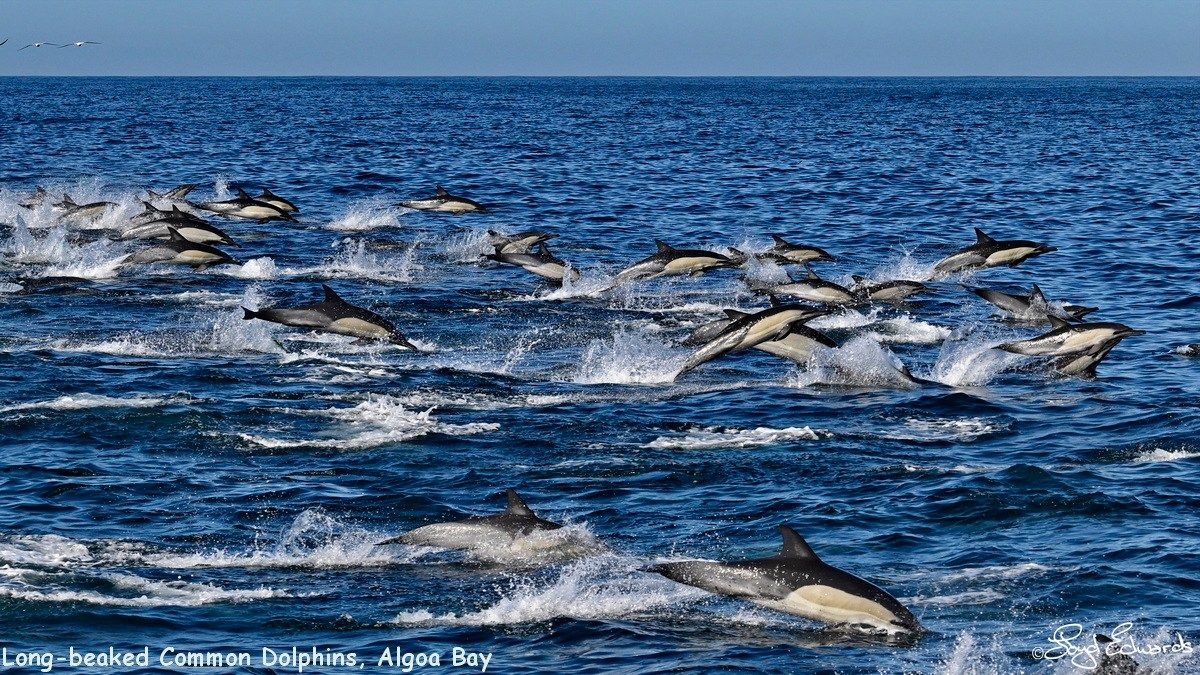
Taken with a Nikon Z9 mirrorless, ISO 280, 72mm zoom, f/9 and 1/1000th second.
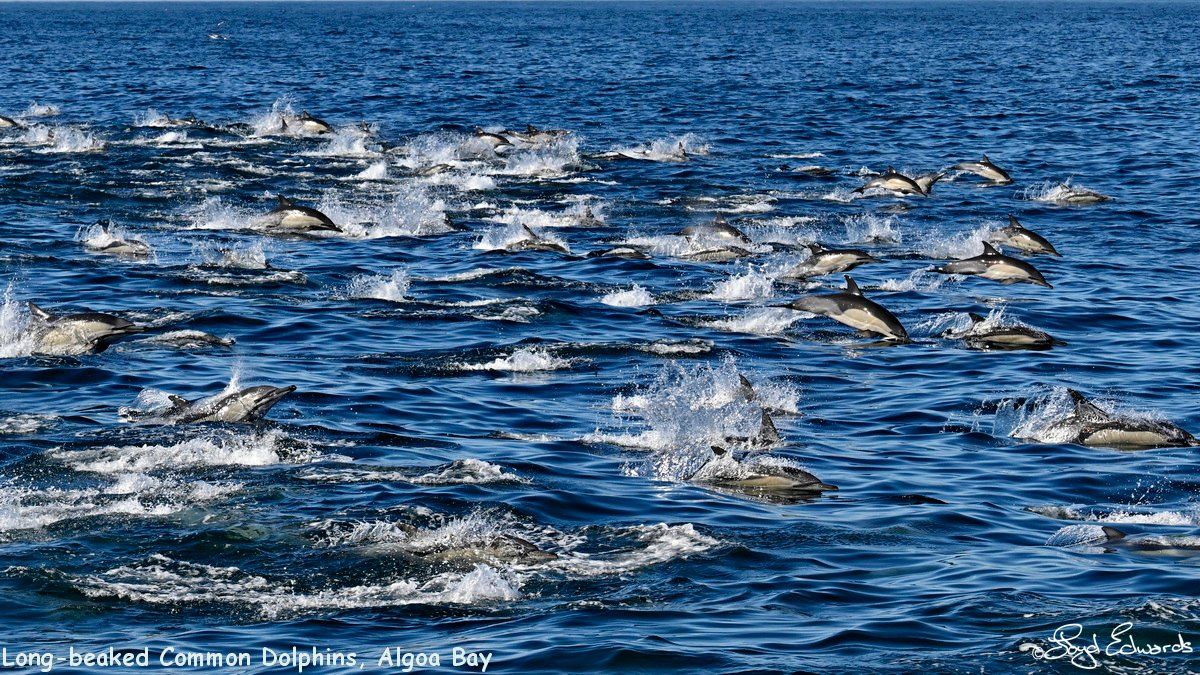
Perpetual motion and once on the move they never seem to stop.
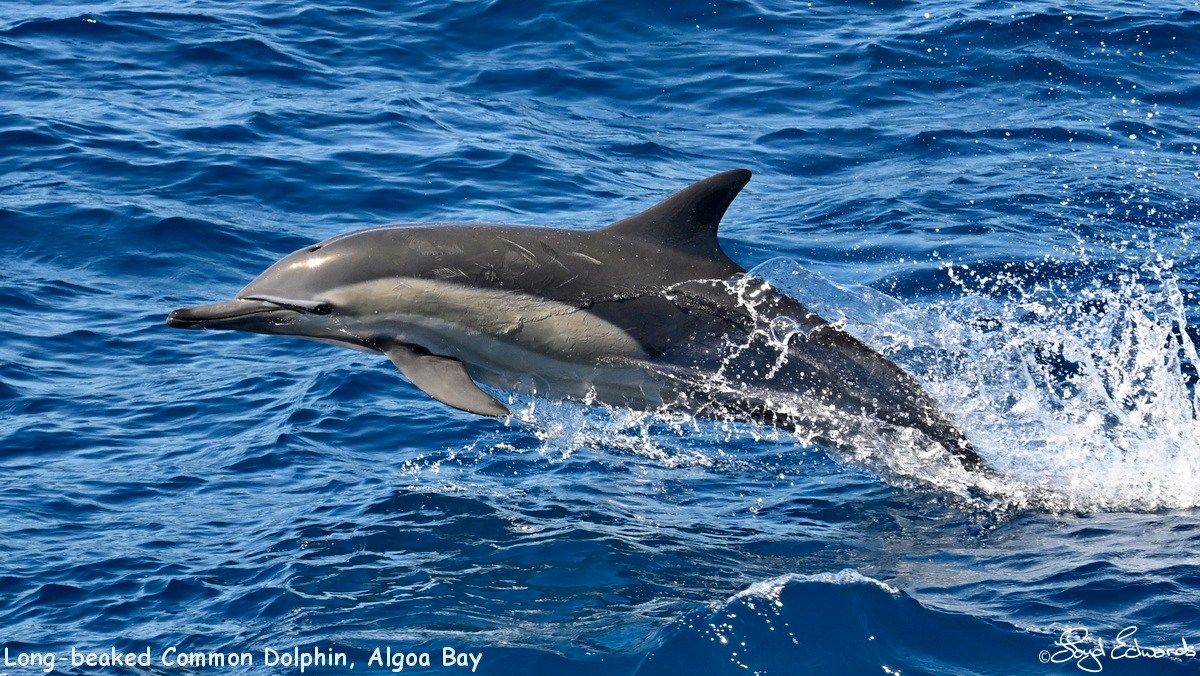
Normal cruising speed.
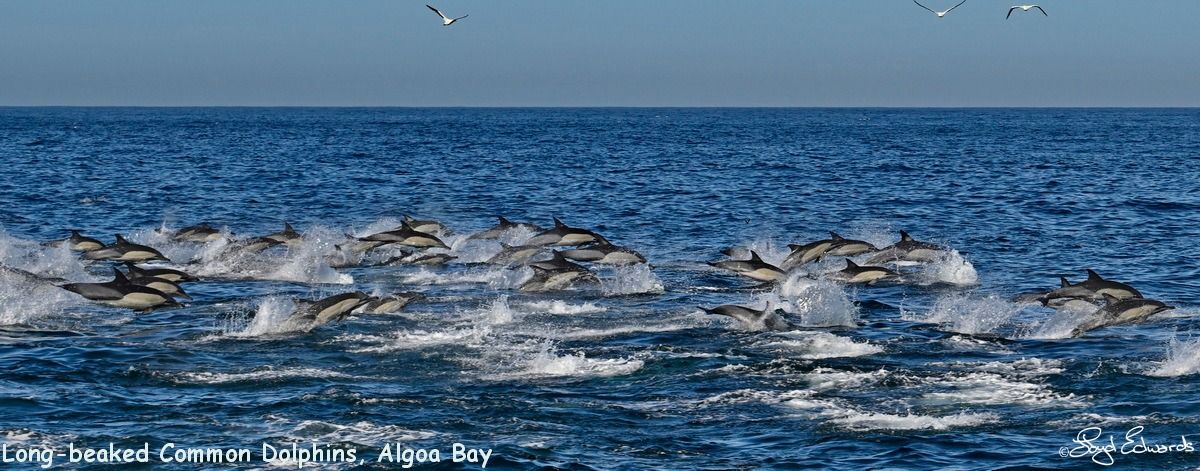
Strange to see them 40km out to sea.
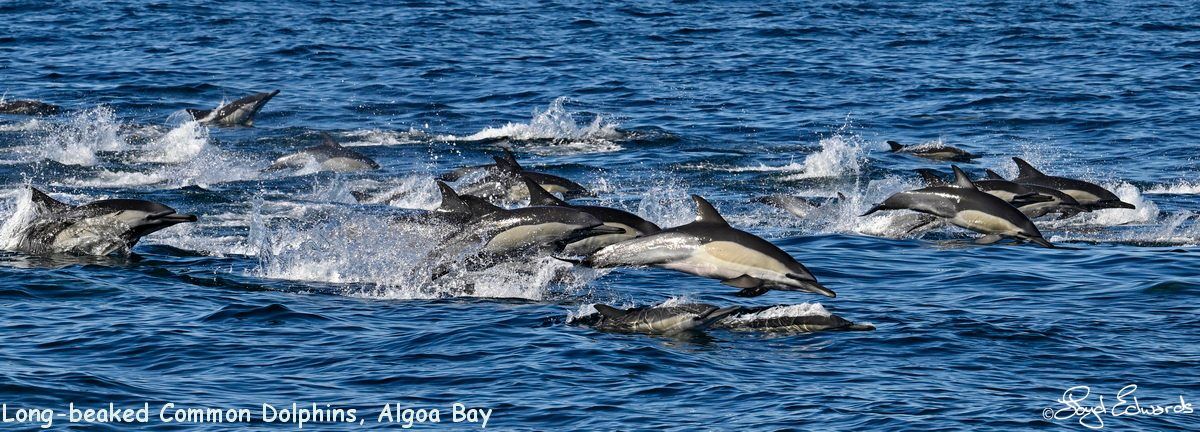
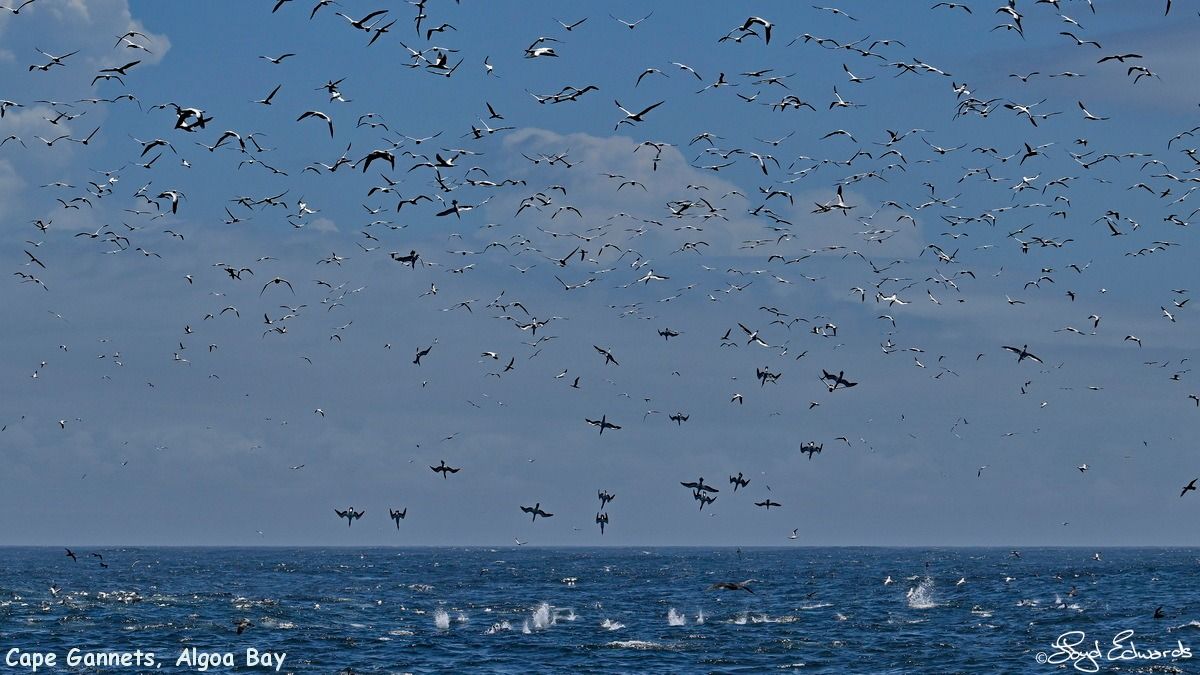
The gannets are never far off!
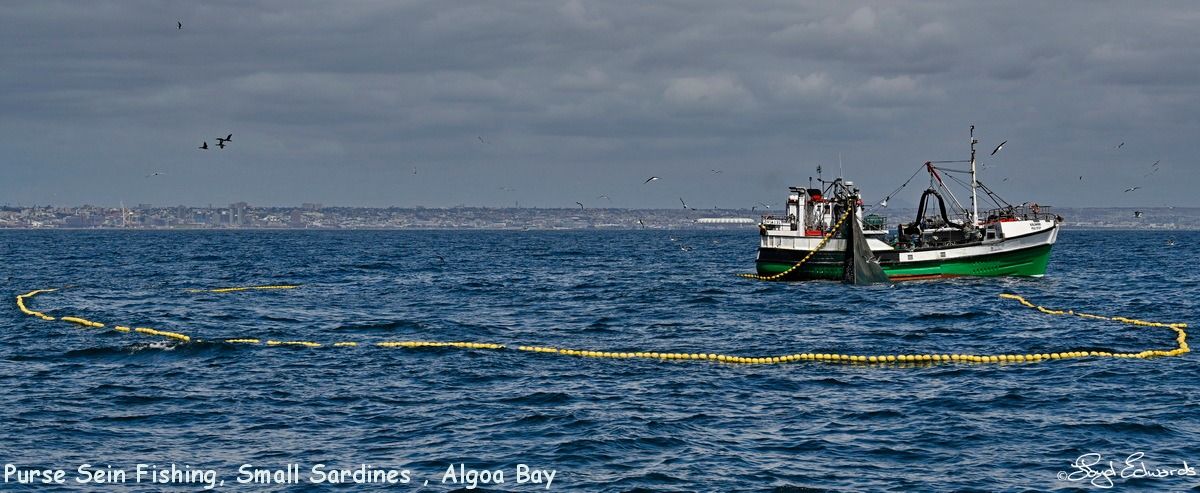
This purse seiner was fishing just outside the 20km exclusion zone around the African Penguin breeding colony at St Croix Island. They caught small sardines.