Addo Submarine Canyons on Fire!
By Lloyd Edwards
Friday, 21st August 2026Great events usually start off very slowly and unassumingly; well, this day was no exception. We ran southeast of Cape Recife for 35 nautical miles, until we hit the edge of the Continental Shelf. It took us 3 hours until we started our transect. That is because Jo Balmer and the Pelagic Birders had been having a field day, two “lifers”, a Spectacled Petrel and a Royal Albatross!
The sea was fairly choppy and everyone rather quiet for the first 3 hours. All of a sudden, I saw a Common Bottlenose Dolphin, the very large offshore species. We have often seen them at the Canyon and like today, often in school of 1000 plus. Then I saw something that took my breath away and I knew immediately that it was a Long-finned Pilot Whale, a massive male at that. Although they have been observed further to the west, this was our first sighting on the Canyons. We still need to check our drone footage, but there must have been at least 300 of them.
Mixed in with the moving mass of cetaceans were about 40 Humpback whales. They looked like sub-adults to me, the kind that are not breeders yet, like in the Super Groups off Yzerfontein on our West Coast. While we have observed Humpback at the Canyons, we have never seen them travelling with other cetaceans. They were swimming into the current and after an hour and a half had barely travelled 1 nm . . . hardly a clever thing to do for an animal that is supposed to be migrating!
The male Pilot whales were absolutely massive, looking akin to the average Killer Whale. Their name comes from when people thought the pod had a leader who they would follow even in dangerous situations like strandings. Males can reach 6,7m and weigh 2 300kg. While they could be potential prey to killers and large sharks, these guys have been known to stand their ground and chase off Killers. They are distinguished from their cousins, the Short-finned Pilot Whales, by a wedge-shaped grey saddle behind the dorsal fin and a grey diagonal streak running from below the blowhole and above the eye. The mouth turns up vertically at the end, unlike the others. The eye streak is not present in juveniles until they reach around 5 years old. Longevity is 45 years for males and 60 for females.
Pilot Whales are always found in water over 1000m deep and associated with the Continental Shelf edges. Their diet is predominantly made up of squid with a small percentage of fish. They use suction pressure generated in the mouth to suck in the prey from up to 20cm away. They are capable of diving to over 800m.
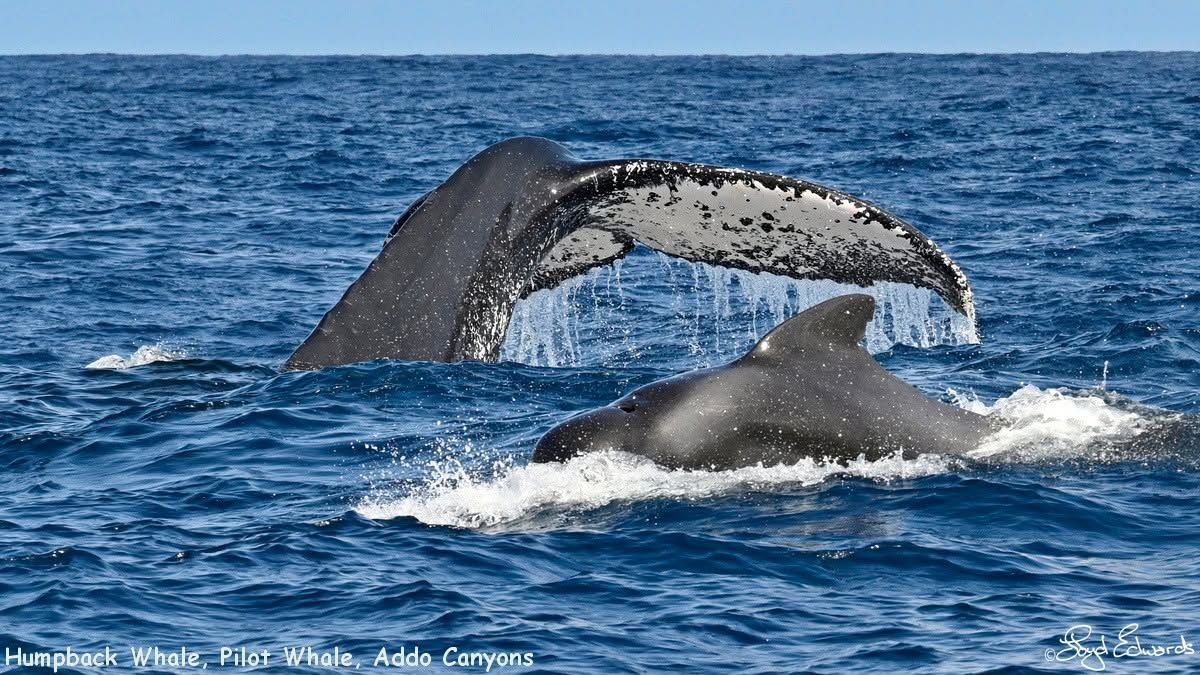
I was so chuffed to get this image, the one I had always wanted! Captured with a Nikon Z9, ISO 720, 200mm, f/9 and 1/1600th second. Two iconic species in one frame!
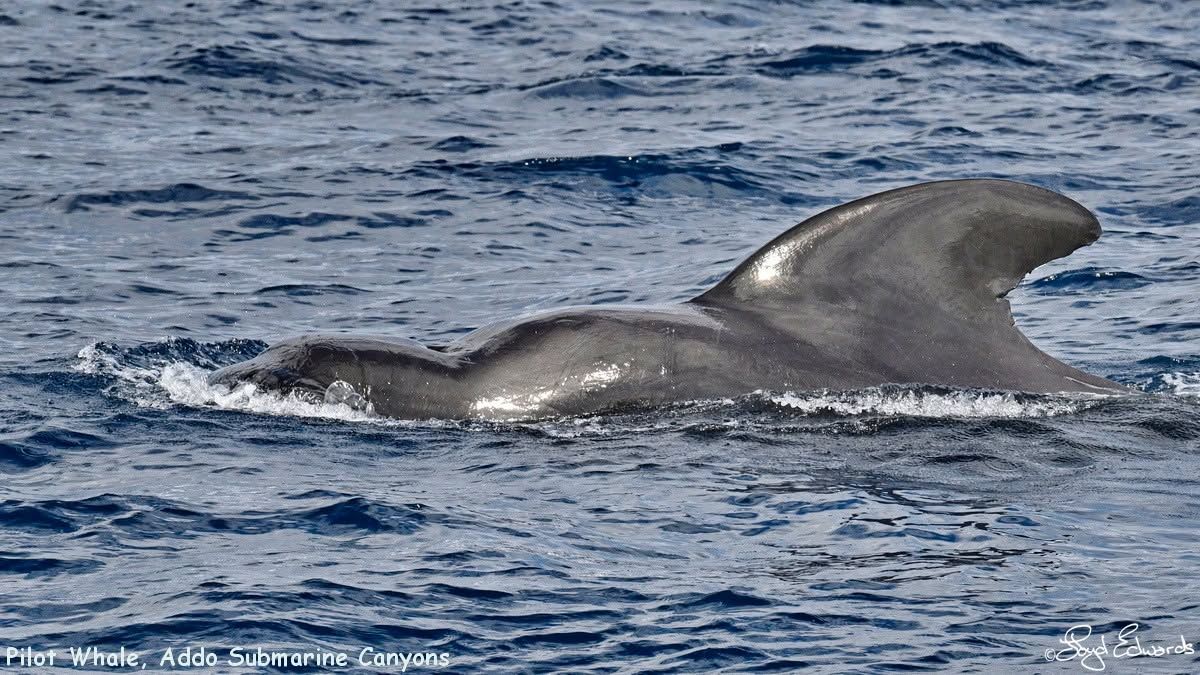
The massive hump sits between the head and the dorsal fin on the male. I have not seen this portrayed in any of the literature.
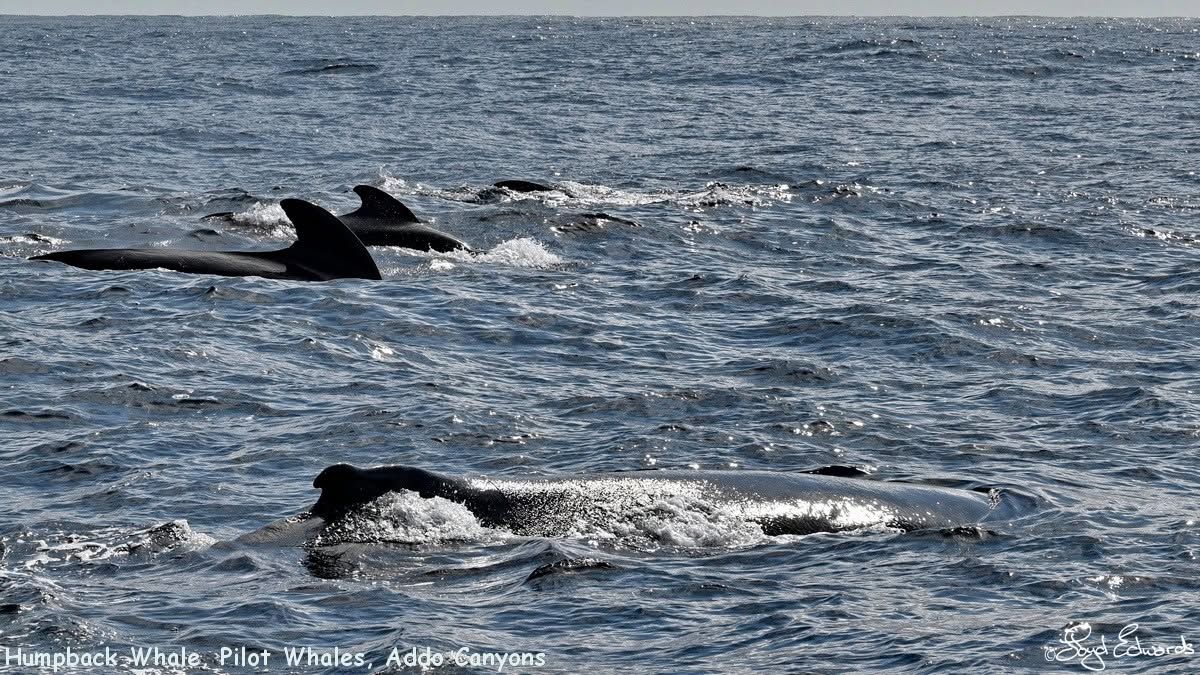
A Humpback Whale cruises in the Agulhas Current, followed by two Pilot Whales.
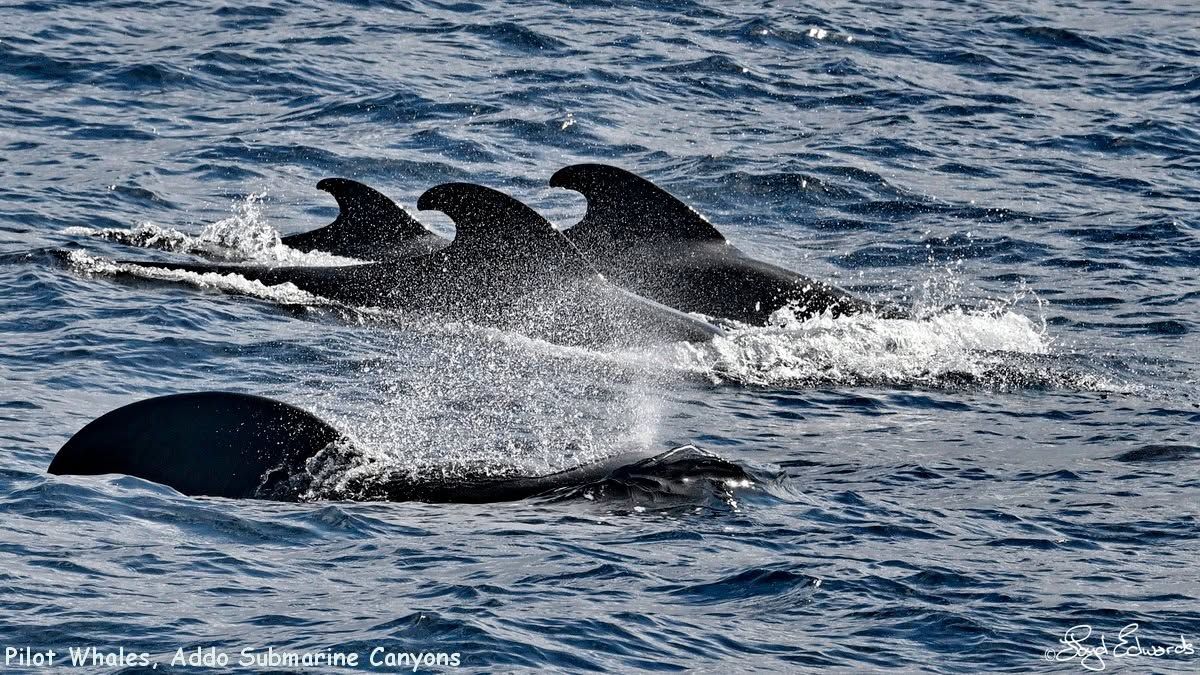
Three female Pilots with a male surfacing in the foreground.
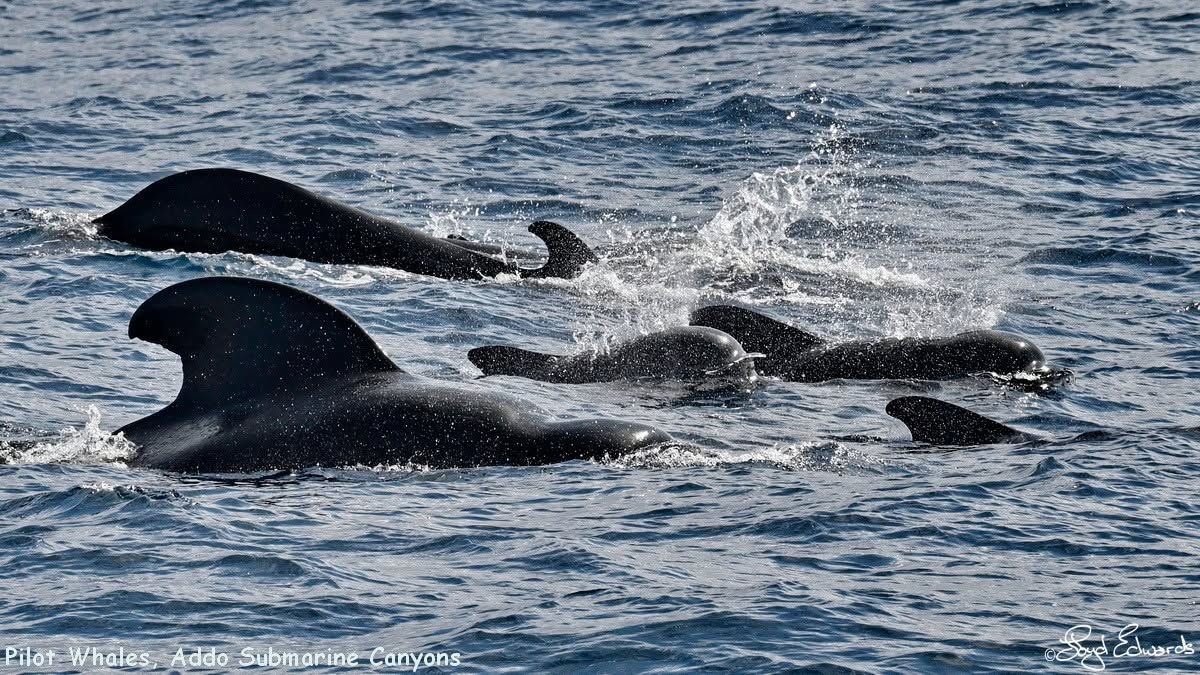
A male Pilot with some females and calves. The calves have been found with breastmilk in their stomachs up to 8 years of age! They do not yet have the eye glaze.
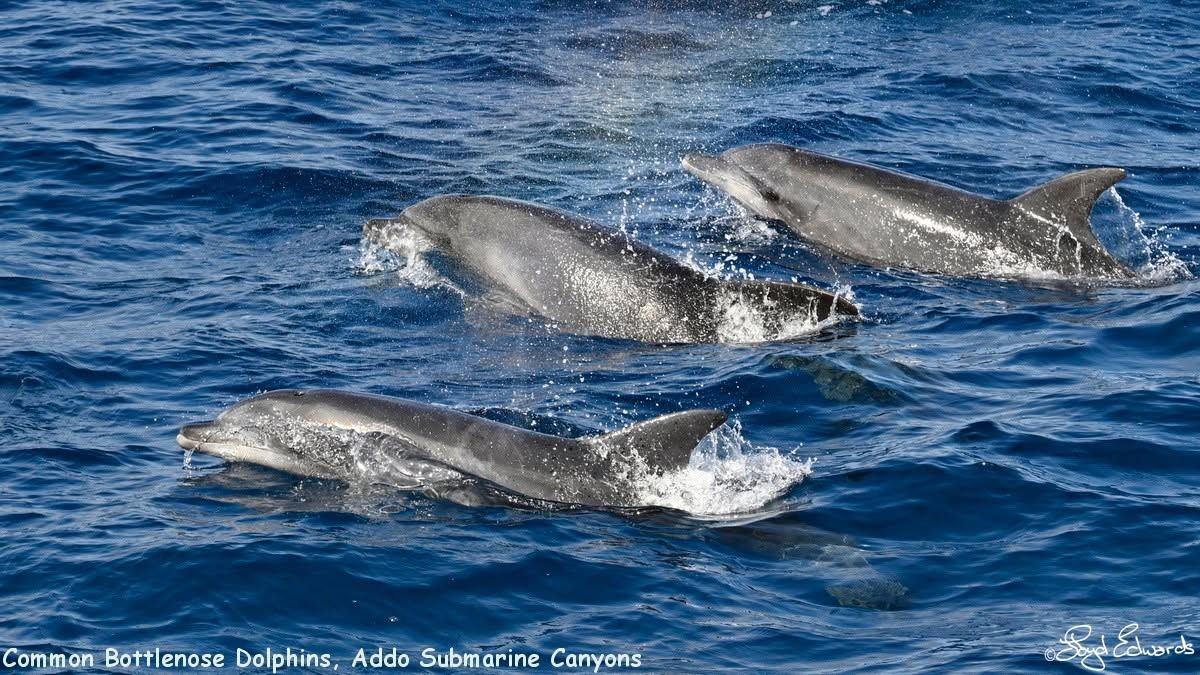
These Common Bottlenose Dolphins just love interacting with our catamaran. They differ from our inshore Indo-Pacific Bottlenose by their large size, stubby rostrum and habitat.
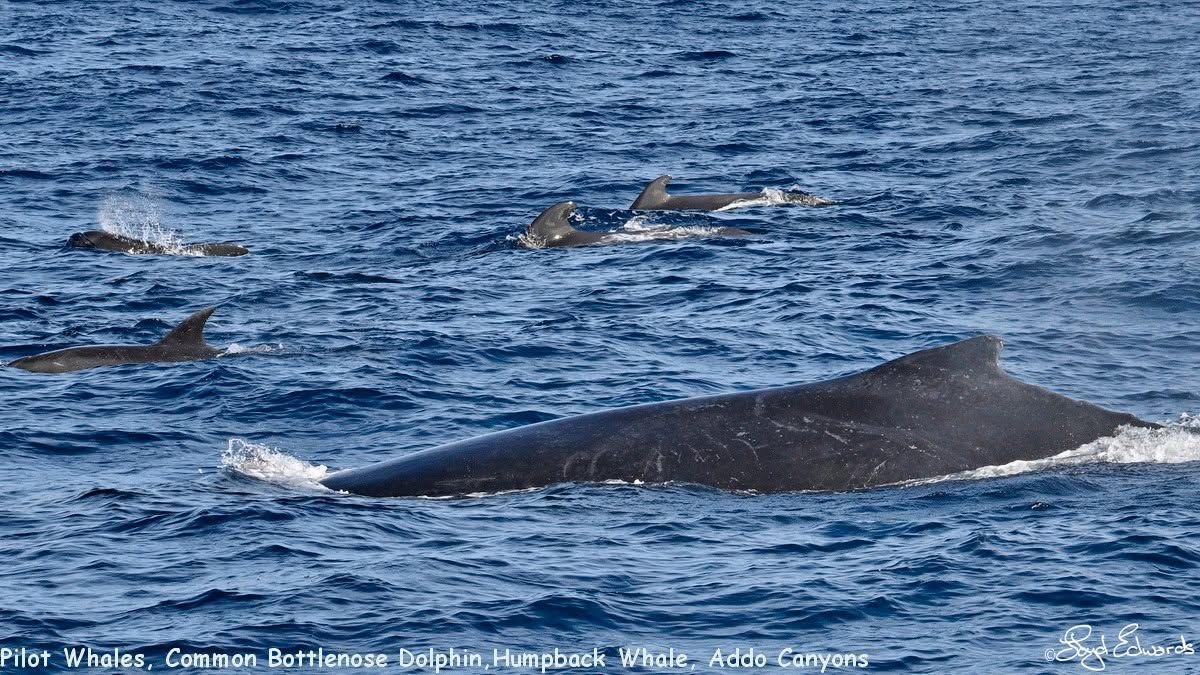
All three species of cetaceans in one frame, not a great image but shows the makeup of the group.
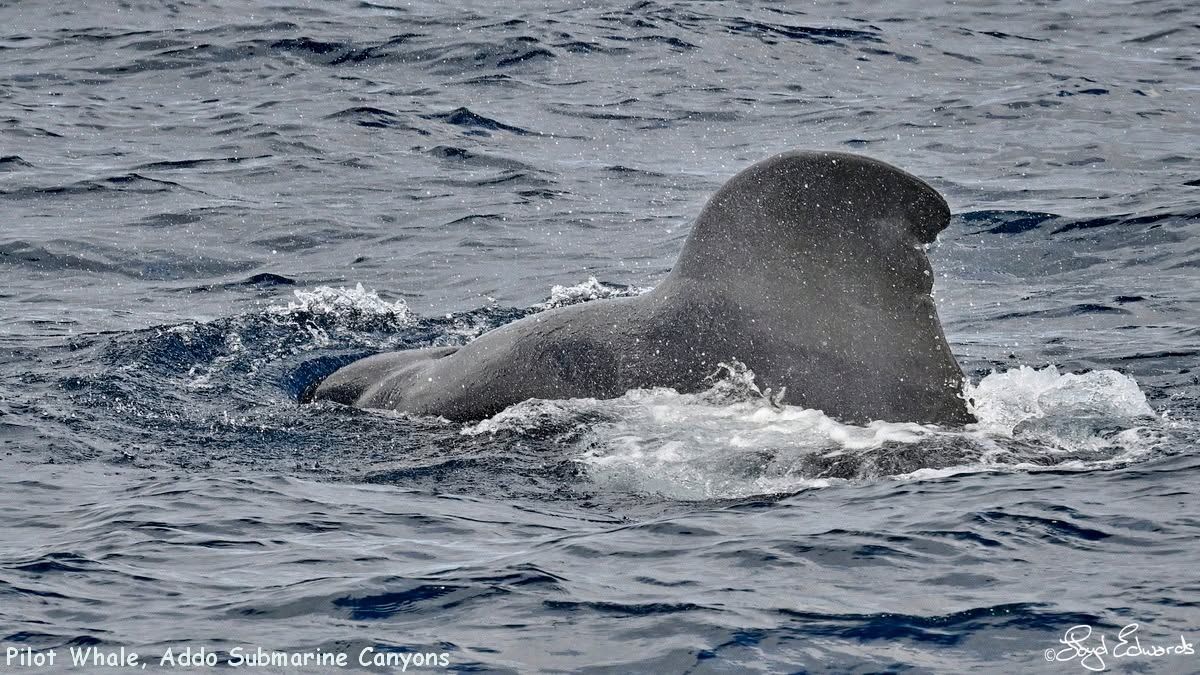
The male's massive dorsal is twice as long as it is high. This gives the animal a stocky appearance. We should have no problem in identifying this oke again because of the very particular pattern on the fin.