African Penguins Loving the Commercial Fishing Ban!
By Lloyd Edwards
Wednesday, 6th August 2025We have been seeing plenty of rafts of African Penguins on our recent cruises. They have been feeding close to shore, as well as in the area where purse seine fishing has been banned. From a paper I co-authored on cooperative penguin feeding, using images collected over the years, it was found they make up rafts of between 25 and 165 birds. It takes 25-30 birds in order to corral a school of fish. Cooperative fishing is much more effective than when the penguins feed alone.
The abundance of bait fish close to the Penguin breeding islands is probably a result of the 10-year fishing ban around the six key breeding areas. In Algoa Bay these include St Croix and Bird Islands. The ban was implemented in 2024 and limits commercial fishing for species like anchovy and sardine, the favourite prey of the penguins, especially when feeding their chicks.
The idea of these 20km bans is to ensure that penguins have enough food to allow their populations to recover. St Croix Island has lost 90% of its population since 2015, which is the largest short-term decline of any penguin colony on record. It is not only on this island, but nationally the African Penguin has declined from a million pairs in the 1920s, to 10 400 by 2021.
Another problem for penguins is the Ship-to-Ship Bunkering (fuel transfers) in Algoa Bay. The Minister has released the second draft bill for comment that will hopefully regulate this messy industry. Besides the damage caused by oil spills, the noise pollution these ships create also interferes with the penguin’s feeding ability. Did you know that Algoa Bay is one of the noisiest bays on the planet?
Although it is still too early to see if penguin’s numbers are recovering, it is very heartening to see so many fish around. Not only do the penguins benefit, but at least 16 other species of birds that take advantage of the penguins bringing fish to the surface.
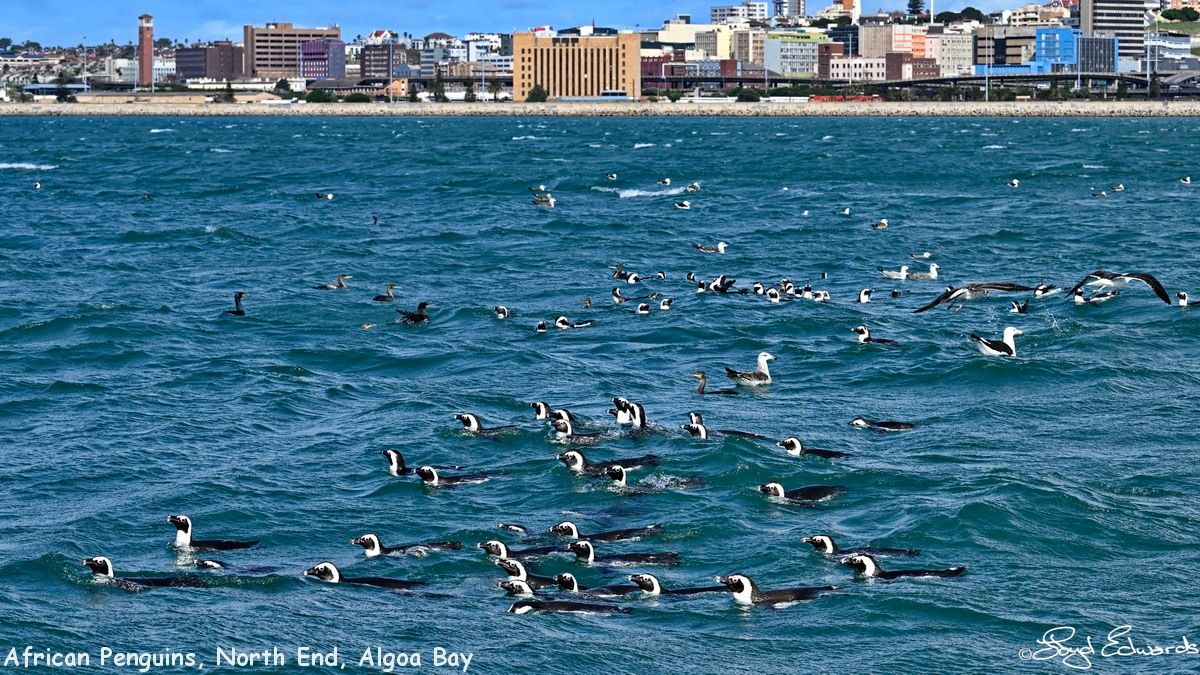
This raft was feeding just outside the harbour. Taken with a Nikon Z9 mirrorless, ISO 640, 87mm zoom, f/11 and 1/1000th second. The small aperture of f/11 keeps the penguins and city in focus.
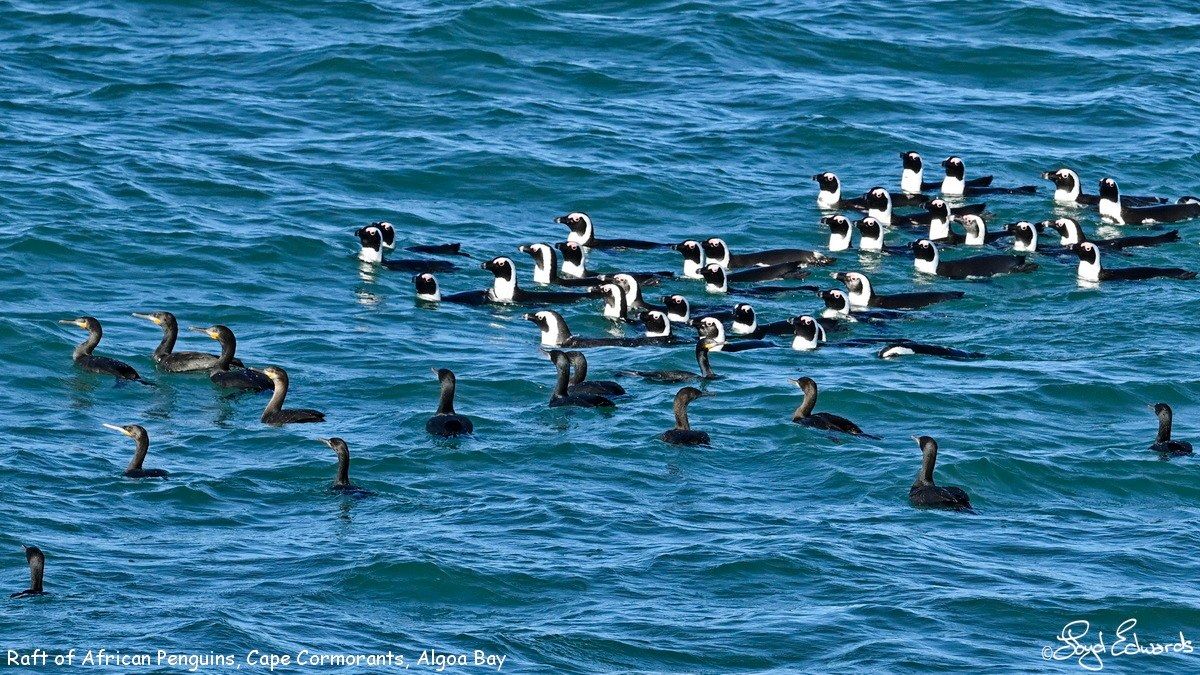
This lot were feeding with a flock of Cape Cormorants. They are often see in each others company. Penguins can stay in the water for days at a time, as their oiled feathers trap a layer of air between the skin and feathers, thus insulating them from the cold water. Cormorants get wet to the skin and thus need to heat up on the islands in between feeding bouts.
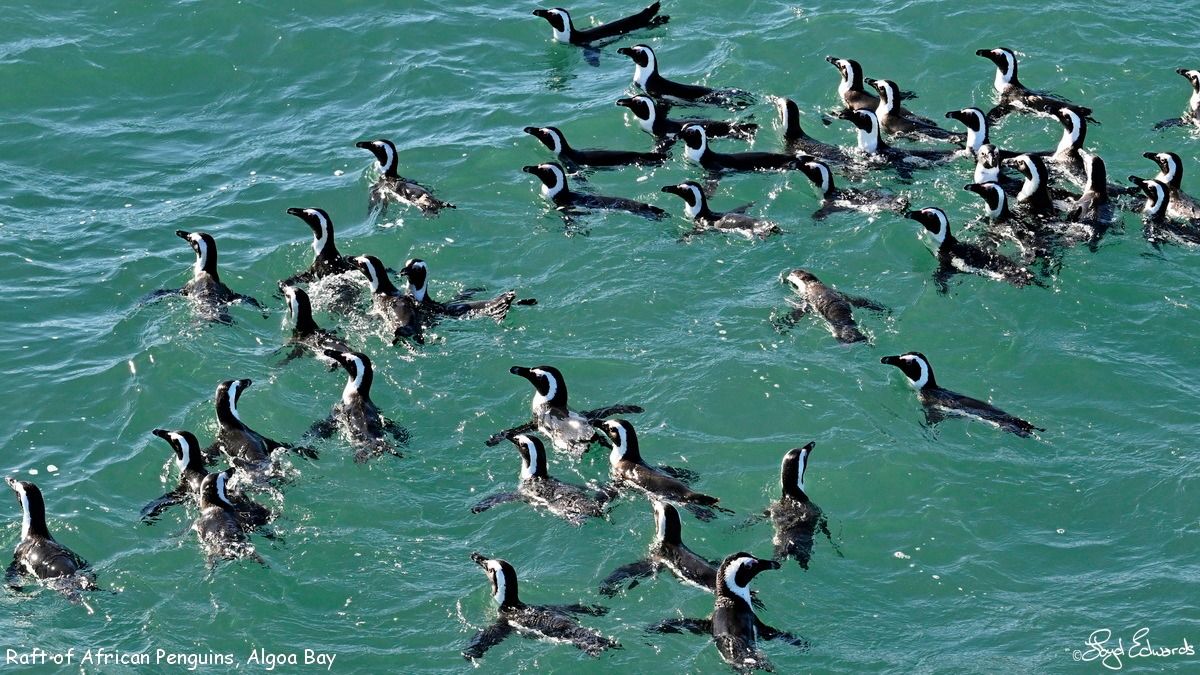
These guys were fishing inside the area that has been banned to commercial fishing.
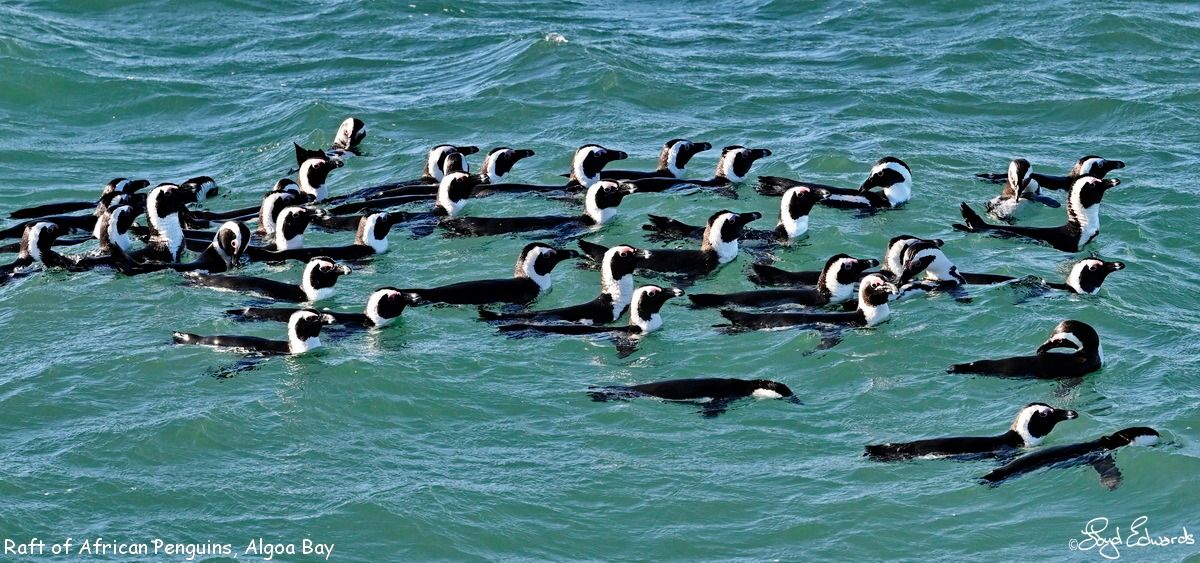
The reason penguin sit so deep in the water is because they have solid bones. This makes them more dense than other birds and better divers.
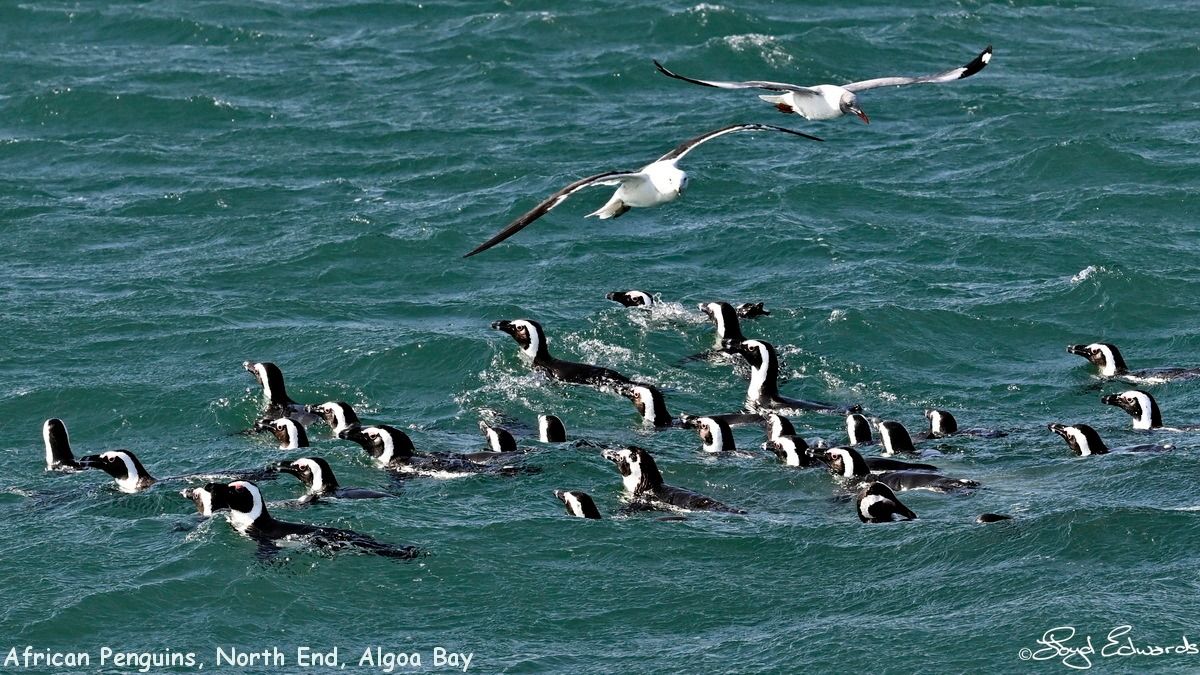
As penguins bring fish closer to the surface, they become available to 16 other bird species, including these Kelp and Grey-headed gulls.
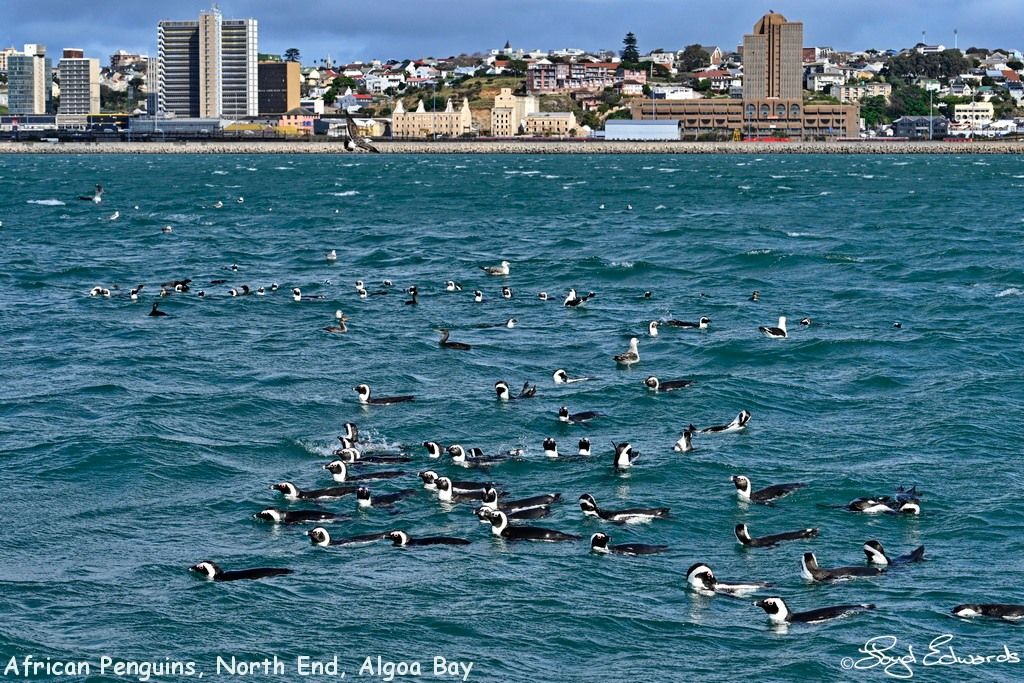
So nice to see these penguins feeding off North End in front of the (now defunct?) post office building.