Bryde’s Whales' Hunting Strategy
By Lloyd Edwards
Tuesday, 22nd September 2026(Read to the end, you will learn 10 things you didn't know!)
When I looked at the first image, I realised that there was such a story to be told! I will cover the visible parts, the eye, the longitudinal ridges on the rostrum (upper jaw), the baleen plates, the rorqual pleats and the organ responsible to coordinate lunge-feeding. This cannot be seen, but sits at the front of the lower jaw, as per image 2.
How does the Bryde’s whale locate its prey? They use environmental awareness to get them into an area of upwelling, where nutrients feed phytoplankton, thus zooplankton and the bait fish on which these long thin 20-ton animals thrive. The pupils of their eyes dilate underwater to let in as much light as possible, giving them excellent vision. Above water a flap of skin drops down over the center of the pupil, thus blocking out excess light. This leaves a double slit on each side, allowing the whale to still focus and scan the surroundings.
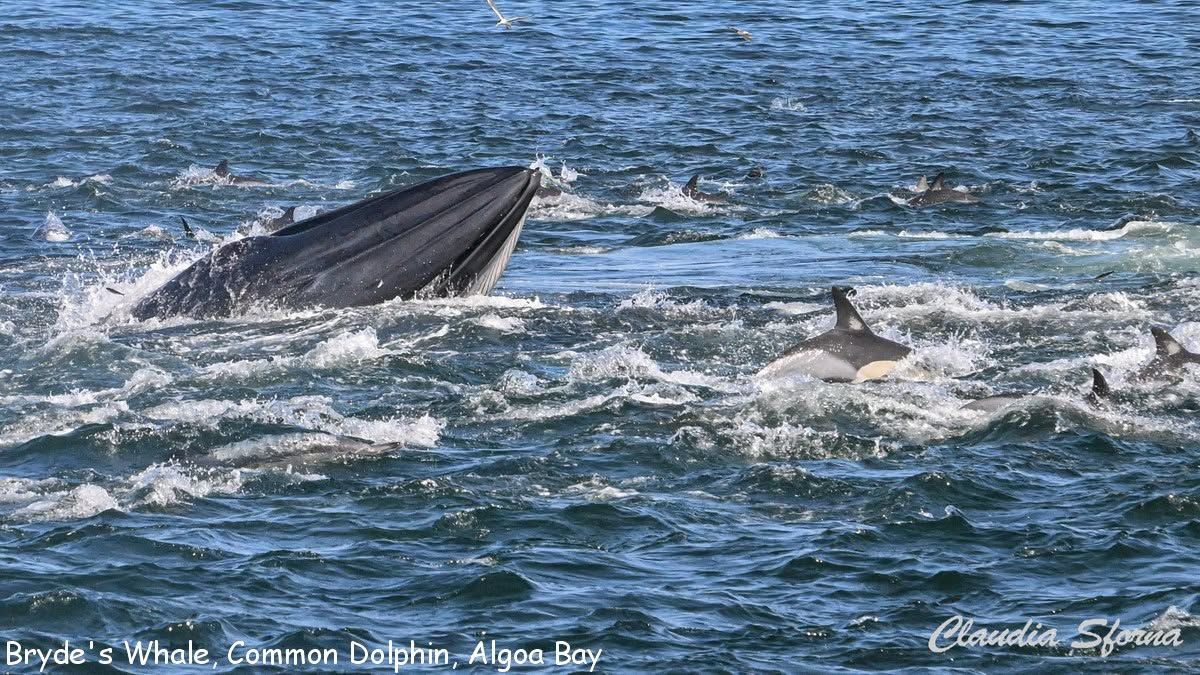
In Algoa Bay they shadow Common dolphins and African penguins, which lead them to their quarry. Unlike echolocation used by toothed whales, Bryde’s whales rely on their acute hearing. They are guided by sounds given off by fish that have been forced into a tight ball. Also by the sounds of African penguins and Common dolphins that are feeding on them. Thousands of Cape gannets hit the water at speeds of up to 100km/h, and no doubt add to the cacophony of sounds. Once the whales have their prey visual, their eyes guide them through the final stages. When fish are scarce, squid and small pelagic crustaceans are also taken in the same manner.
Accelerated is fastest just before they smash the frenzied bait fish, usually sardines and anchovies, but also saury and mackerel This is when the specially adapted organ present in all rorquals (whales with expanding throat pleats), takes over. The size of a cricket ball, it is a fluid filled cavity containing blood vessels, which feed receptors that detect pressure and movement. The organ’s vascular and nervous tissues originate in the vestigial front tooth socket in the lower jaw. These animals possessed teeth before evolving baleen plates.
The whale approaches the bait ball and lunges forward, opening the bottom jaw up to 90%. Bryde’s whales are the only cetaceans with 3 longitudinal ridges on the rostrum; all others only have a 1 to 2cm single center ridge, which runs from the snout to the blowhole. The ridges have a hydrodynamic function, directing water flow over the head. This occurs when drag increases as the mouth opens and the 40 to 70 throat pleats expand rapidly.
This process is monitored by the organ and allows the whale to turn on its side or back, which probably lowers the pressure of the incoming water. Hairs or vibrissae on the chin also sense incoming fish. The tongue is lowered and the rorqual pleats distend, caused by water pressure on the inside. This allows the whale to take in more fish. The organ then sends pulses to the brain to close the mouth and so limit damage to the mouth area.
Once the prey is inside, the organ now needs to reverse the process. The 250 to 410 baleen plates on each side of the upper jaw are set into place. The rorqual pleats begin contracting and the tongue is pushed upwards, forcing the water out through the baleen plates. This keeps the fish inside, which are then swallowed down the grapefruit sized throat. Sometimes penguins, gannets and even small sharks are accidently ingested!
This lunge feeding behaviour is unique among vertebrates and allows them to reach such a massive size, like the Blue whale. Of all the rorquals, only Bryde’s and Humpback whales blow bubbles to further concentrate prey.
Lunge feeding does come with a cost. These short periods of extreme muscle activity require enormous amounts of energy. This can be 50 times greater than the normal energy requirements of terrestrial animals of a similar size. It can be 20% more than the body is capable of producing. It has to rely on inefficient anaerobic metabolism to make up the difference. A period of recovery is necessary before the next lunge feed can take place.
While researching this post, I came across a very sad story . . . Japan still hunts Bryde’s whales, 143 in 2025, 179 in 2024 and 187 in 2023 . . . makes me so fucking sick I don’t want to look further back!

A Bryde's whale lunge-feeds on it's side, rorqual pleats fully extended. The eye, baleen plates and short pectoral fin are visible. Captured with a Nikon Z9 mirrorless, ISO 500, 300mm zoom, f/8 and 1/1600th second.
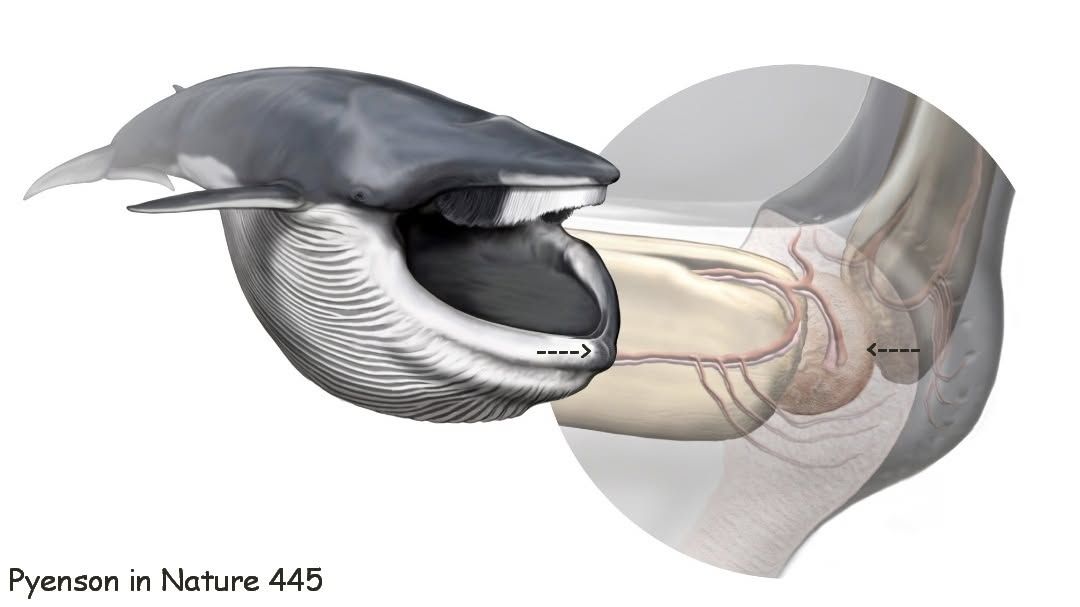
The organ that coordinates the lunge-feeding is located between the unfused lower jaw bones.
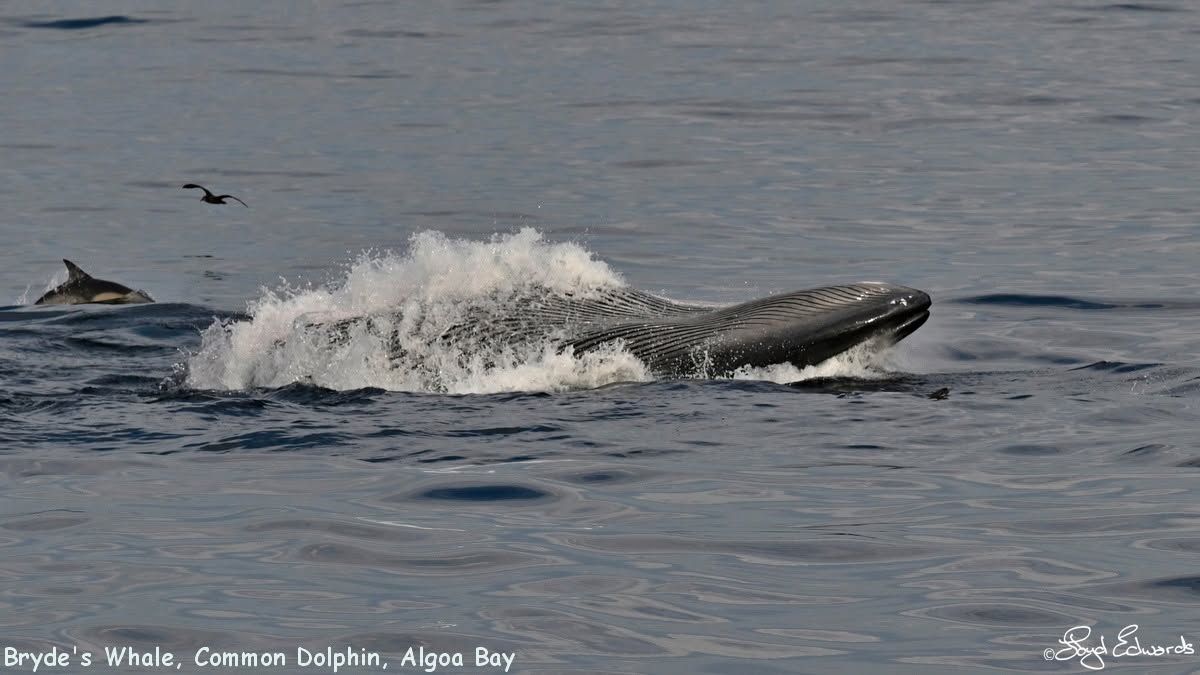
Here a Bryde's whales turns upside down while lunge-feeding. It has already taken in the fish and closed the mouth.
Thanks to Inferno for this image which clearly shows the 3 longitudinal ridges on the rostrum.
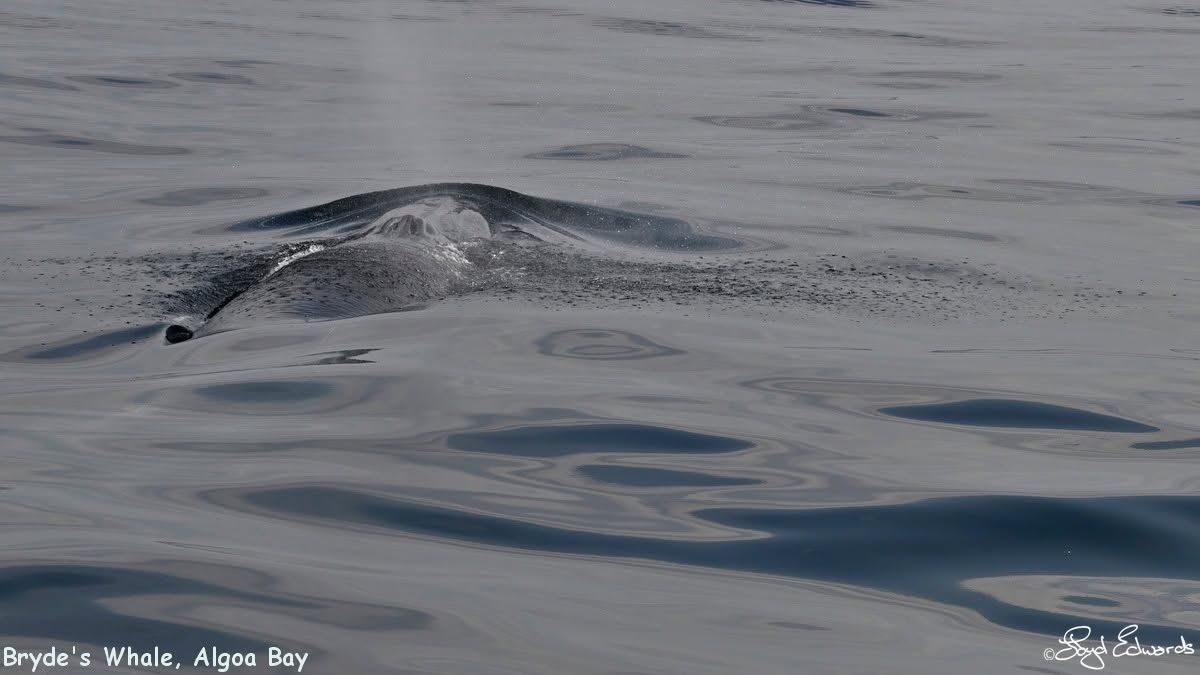
The blowholes are open and clearly visible, while the whale takes a breath prior to another dive.
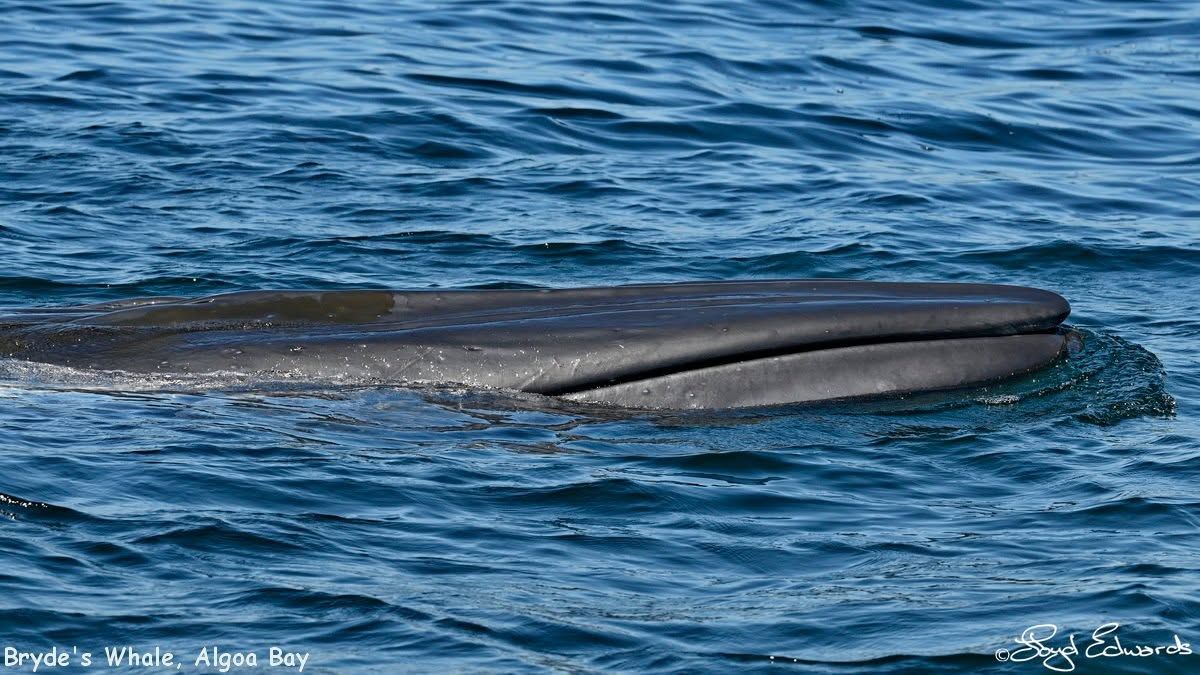
The front of the whale is pointed, which makes it streamlined and thus very fast through the water.
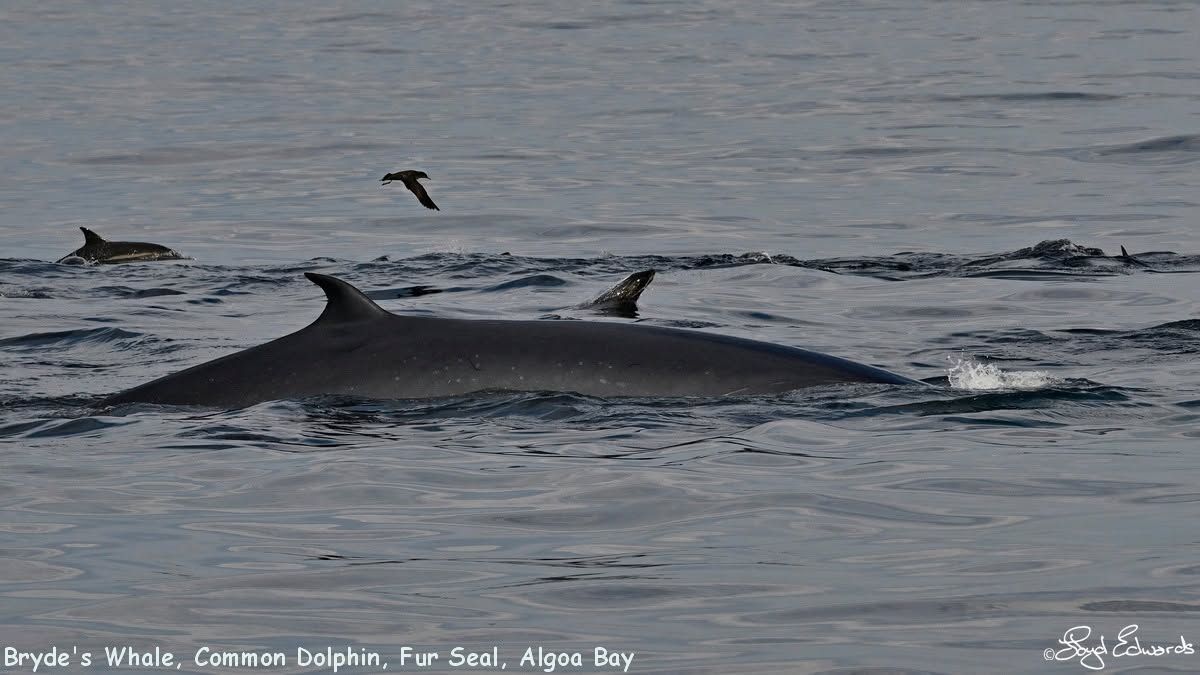
This is about the best view you can get when the animal is not feeding. The shape of the dorsal fin allows us to identify individuals. The SA population could be almost 1000 animals.
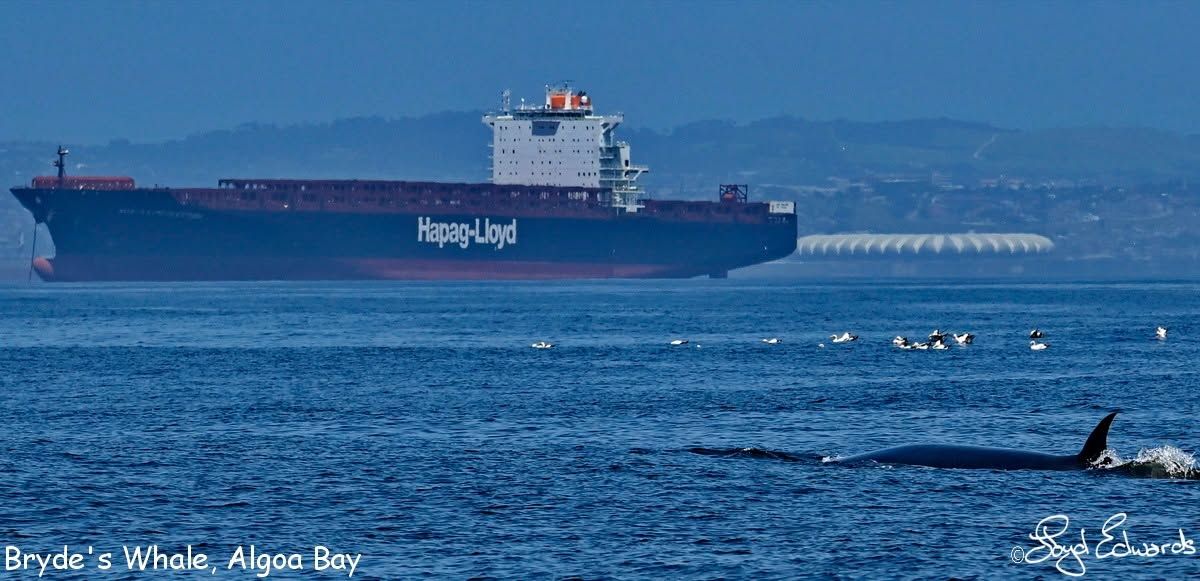
As Bryde's whales make use of sound to locate their prey, vessel noise could interfere with this process and add to their stress levels.