Pygmy Killer Whales, Feresa attenuata
By Lloyd Edwards
Friday, 6th March 2026The Addo Submarine Canyon is certainly delivering like it is meant to! On our full day research cruise yesterday, we managed to spot four of the rarely observed and shy oceanic Pygmy killer whales (PKW). We knew that they were Blackfish, which is the name given to Killer whales, False KW, Pilot whales, Melon headed whales . . . but which one? After much research and comparing of photos, we came to the conclusion that it was the smallest one!
We left port early, armed with our two scientists, Martha from France and Timea from the Czech Republic, who have been studying the Addo Canyon for the past 2 months. It was a Raggy Charters sponsored research cruise and the whole team were present, including our famed Bomb Squad! Algoa Bay was teeming with baitfish like never before. Could the recent purse sein fishing ban for 20km around the penguin islands (St. Croix) be a reason for this? Before long we had seen 3 schools of Common dolphins, the last one around 5 thousand strong. Bryde’s whales were observed at regular intervals.
While on our transect along the Continental Shelf, we went past a floating log, under which were hundreds of Dorado or Dolphin fish. Jake pleaded and very soon we had 3 on board! I told the students to keep a sharp lookout while this was going on, as we had seen Sperm whales at this location. Very soon our lookouts started shrieking that there were weird dolphins next to the boat. We managed to get some photos, but as the drone took off, they disappeared. Anyway, it was the first sighting of this species for all aboard.
Although there have been PKW strandings in SA, the first live sighting was in 1969 off KZN and then only again off Sodwana Bay from 2021 to 2025, mostly between March and May. These sightings were in shallow water, but very close to the Submarine Canyons, just like our sighting. Another reason why these extremely productive areas need to be protected, especially from ship traffic, over fishing and oil and gas exploration.
These animals can be confused with Melon headed whales (MHW), although these have not yet been observed in our area, the closest being off Mozambique. MHW normally move in groups of over 100 individuals, whereas PGW groups are between 3 and 10. The MHW groups are tightly-packed and travel rapidly with frequent changes in direction and then all move off together. The PKW, like in our case, tend to raft at the surface, while moving around slowly and suddenly disappear if disturbed.
The males reach a maximum of 2,59m and the females 2,45. Compare this to our Indo-Pacific bottlenose dolphins at 2,57 and 2,49. Nothing in it really.
High levels of Myoglobin have been found in the muscles of stranded animals, which indicates that they are deep divers. The ones we found were in 600 metres of water. Stomach contents of stranded animals contained deep dwelling squid and fish. Due to the frequency of their clicks, it is estimated that they can detect prey between 50 and 200m.
Captive PKW in aquariums eat 5.4 to 8kg of food per day. They are very aggressive towards other cetaceans while in captivity and killed a Dusky dolphin. A pilot whale was also killed after receiving a sharp blow at the base of the skull, the same way that KW deal with some prey.
A huge that you to the companies that have donated products for our new research vessel for the Addo Canyons. Construction will start early next year. In the meantime we will make do with our tourism catamarans, when they are not in use. The outboards sourced from Yamaha Marine, buoyancy foam by RigiFoam & Resichem, resins from NCS resins and potentially fiberglass from Fowkes Brothers.
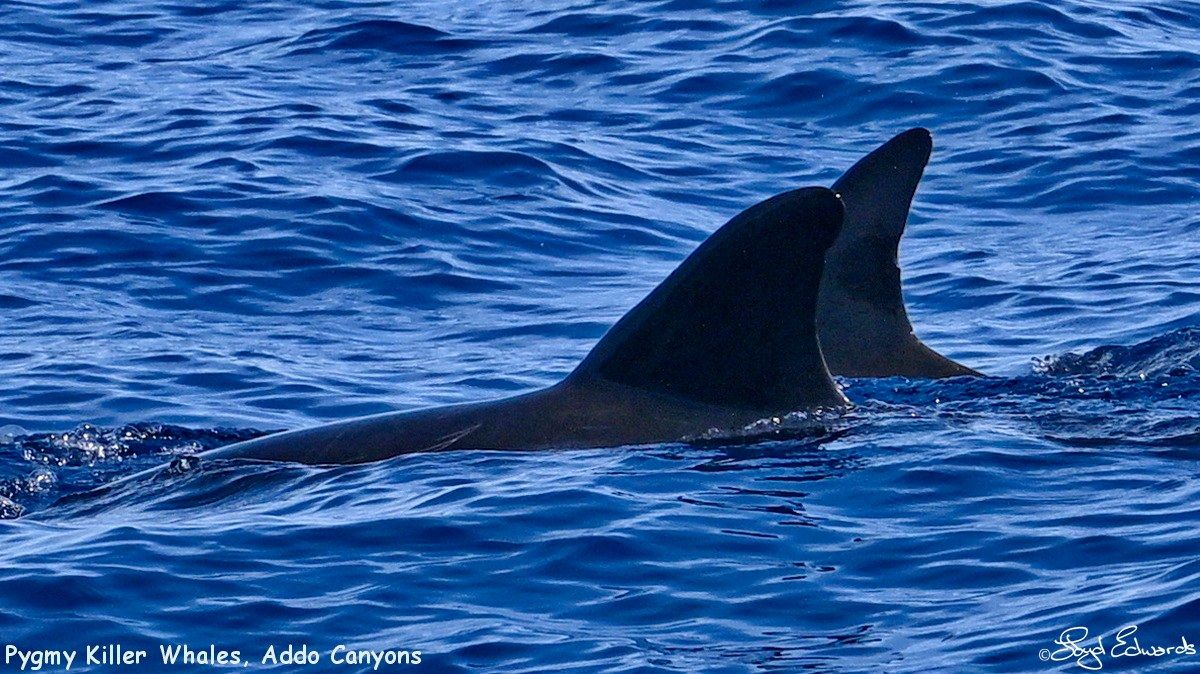
Taken with a Nikon Z9 Mirrorless, ISO 450, a 70 to 200mm lens cropped to 300mm, 1/1250th second and f/9. The one in front could be a juvenile.
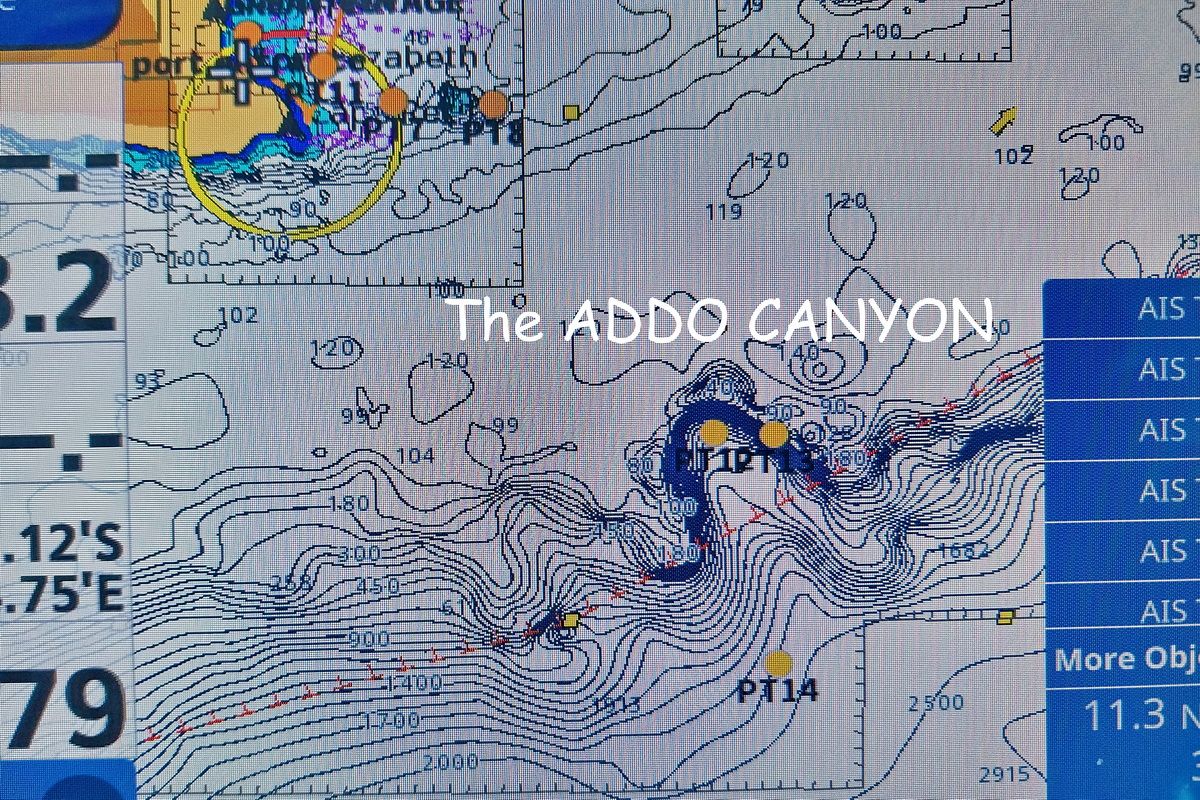
The location of the Addo Canyon, 35nm off Cape Recife.
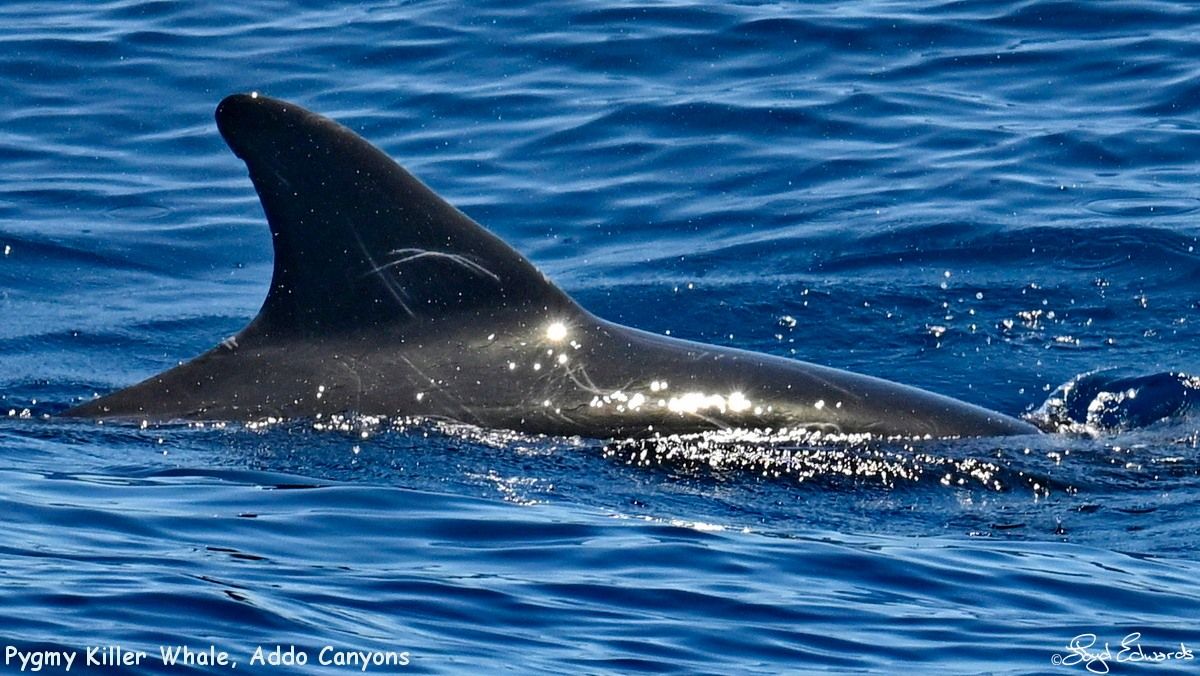
Plenty of scars, probably from conspecifics.
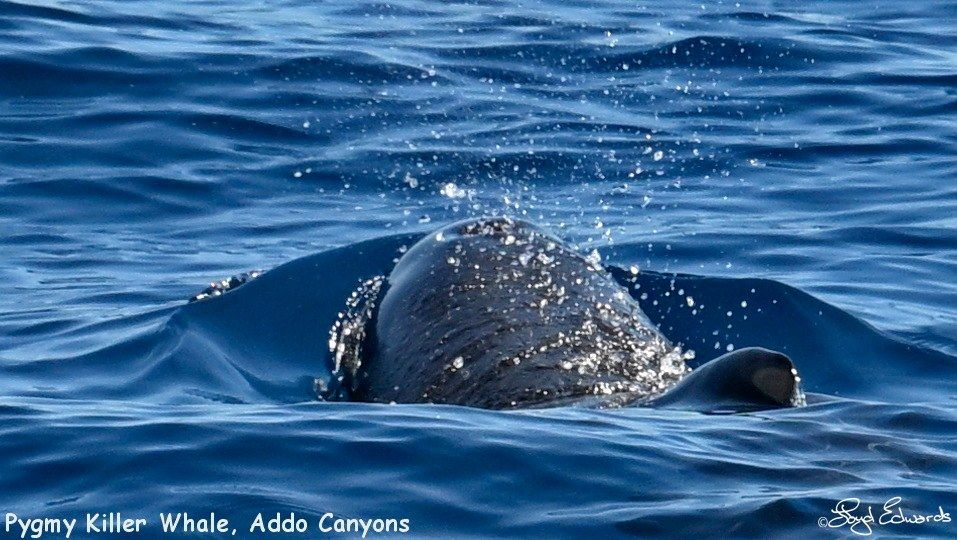
Note the indentation around the blowhole.
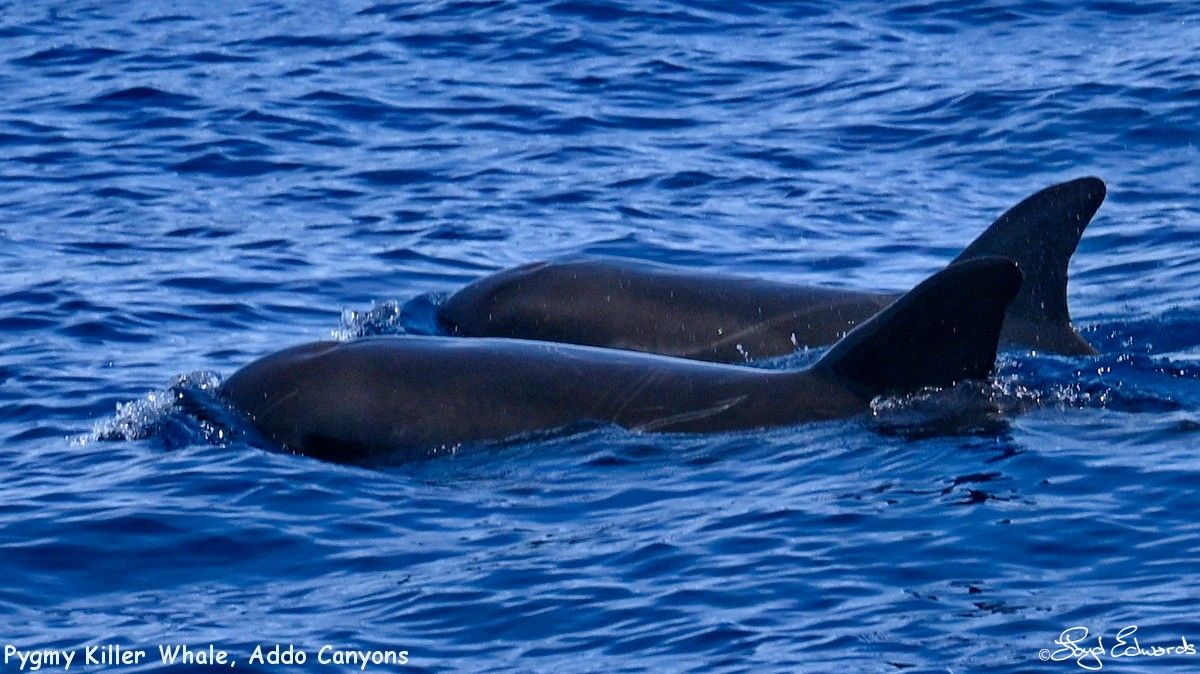
They never showed the mouth region or flippers, which are distinguishing features, telling it apart from the Melon Headed Whale..