“Sardine Run” now?
By Lloyd Edwards
Tuesday, 9th December 2025This is the question many people have been asking me, after two weeks of astonishing bait ball activity in Algoa Bay. The first thing we need to understand is, what is a bait fish? It is any fish that eats plankton. They are highly nutritious and feed other animals higher up the food chain. They are readily used by anglers as bait. In our area, they could be sardines, anchovies, saury, mackerel or red-eye round herring.
The whole food chain starts off in an area known as the Addo Canyons, some 35nm (70km) south of Cape Recife. For more information, see the Raggy Charters Facebook Post dated 31st March 2025. https://www.facebook.com/share/p/1JsSXxuveU/
In summary, nutrients and plankton spores are upwelled to the surface by various processes. The spores hatch in the Oxygen and sunlight waters on the continental shelf. The phytoplankton (plant) feeds the zooplankton (animal). This is then consumed by the bait fish and in turn, by all the other predators in the trophic levels above them.
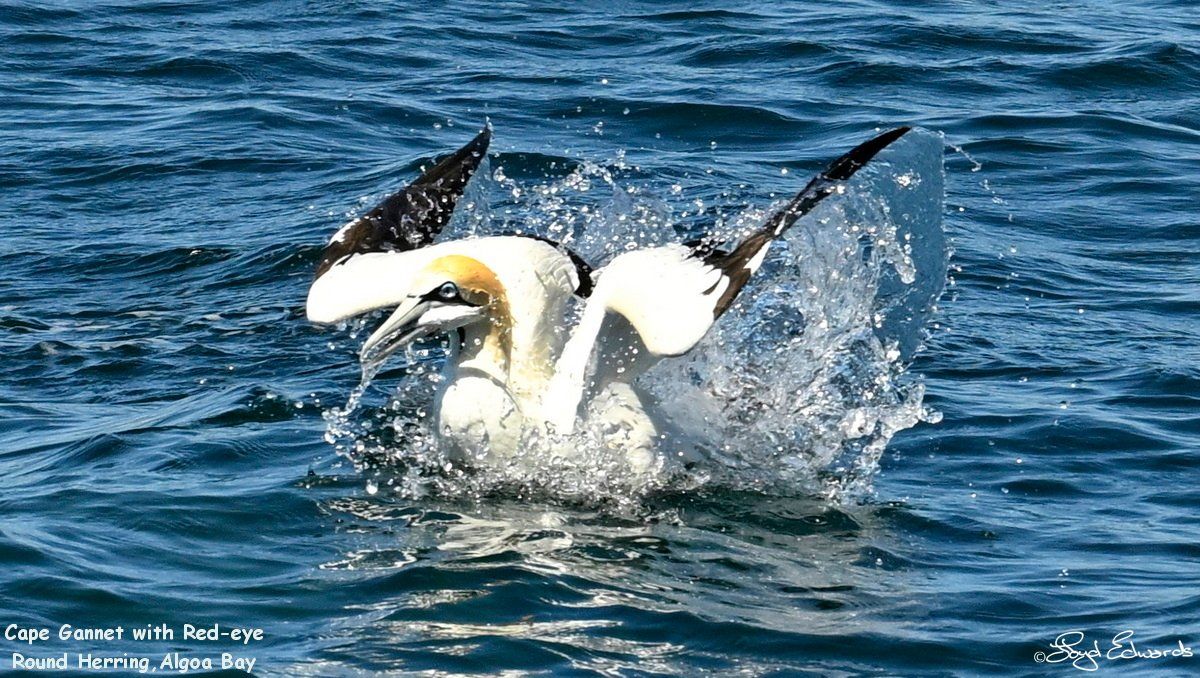
In the previous post we spoke about how the gannets have evolved to be able to dive and locate their prey at depth. Now we find out that they swallow their prey underwater, on their way back to the surface. This is to prevent skuas or gulls from harassing them on the surface and taking their fish. Hence my problem in getting a decent image of a gannet with a fish in its mouth! I managed a below par capture!
Once they break the surface of the water, they change the shape of the lens in the eye. This allows them to focus and locate the exact position of their prey. Using their webbed feet and slightly open wings, they close the gap on their quarry. They lunge towards the fish, grabbing it with their pointed bills. Small backward facing barbs are located along the edges, which help to hold the slippery prey. Most of the fish are swallowed headfirst . . . unlike the one in my image! This is so the fins do not injure their oesophagus.
Two Populations of Sardines
Recent research has shown that there are two distinct populations of sardines, Sardinops sagax. One is a warm temperate stock from the Indian Ocean, of the southern and eastern Cape. The other is a cool temperate stock from the Atlantic Ocean, in the south western Cape. Although one would expect the warm stock to migrate to KZN, this is not the case, as it is the cool temperate stock that does so!
So, while we get sardines from the warm temperate stock coming into Algoa Bay throughout the year, this is not so with the cool temperate stock. The sardine run thus refers to the mass migration of sardines, from their temperate core range in the Atlantic Ocean, along the south and east coasts, eventually arriving in KZN. During winter, they follow the upwelled cold water and make use of the increased food availability. When this upwelling stops, so does the food supply. Warm tropical water is low in nutrients and thus cannot support the biomass the sardines need.
Tempted by a never-ending supply of prey, they have swum into an ecological trap of subtropical habitat and simply get eaten or disappear without breeding! They cannot swim back to their breeding grounds, as the inshore current flows in the opposite direction!
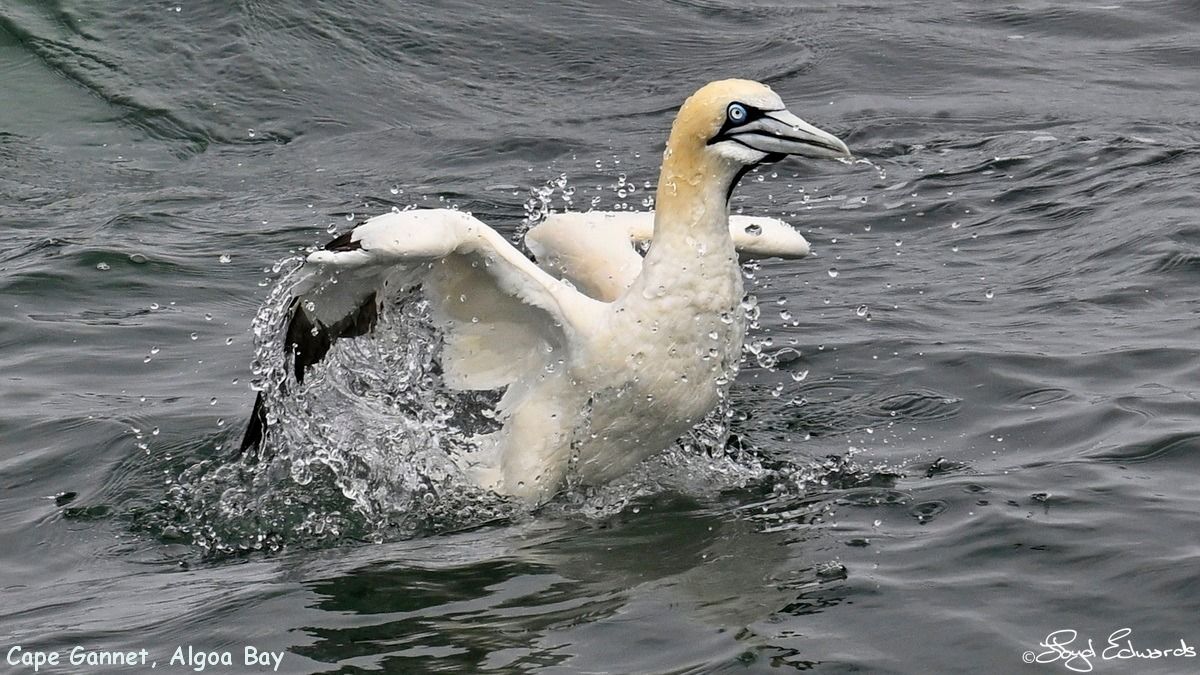
This gannet resurfaces after a feeding dive. Taken on single exposure with a Nikon Z9 mirrorless and 70 to 200 lens, set at full zoom. ISO 360, f/8 and 1/1600th second.
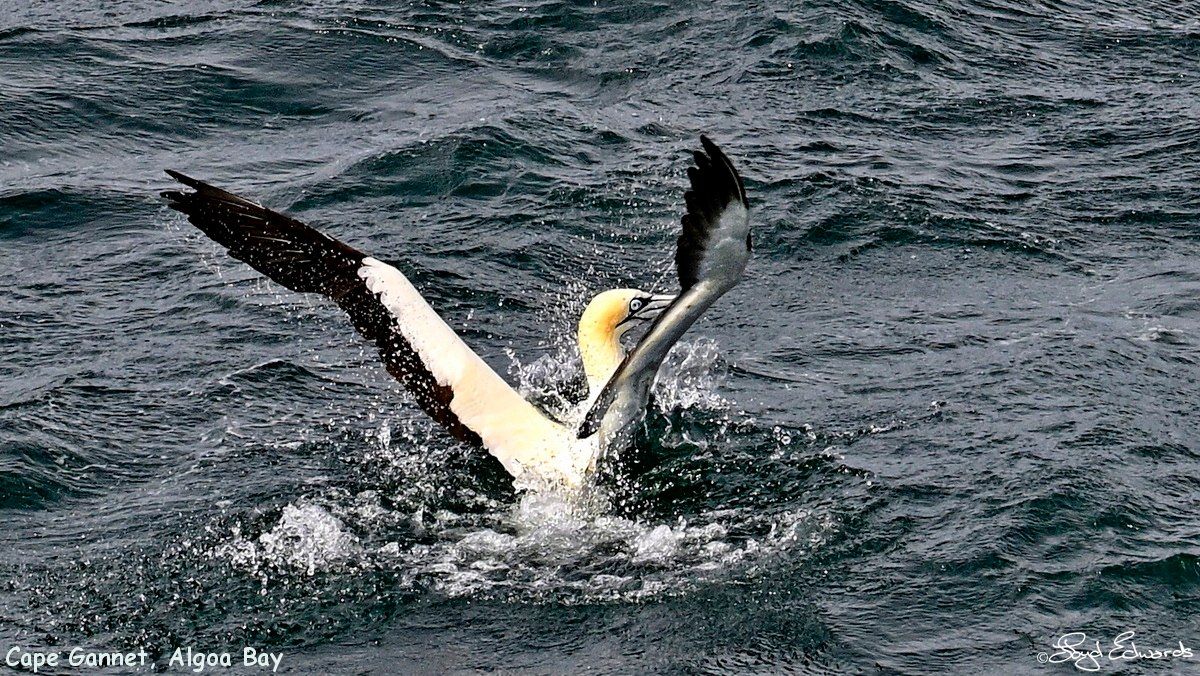
No time to waste while the action is hot.
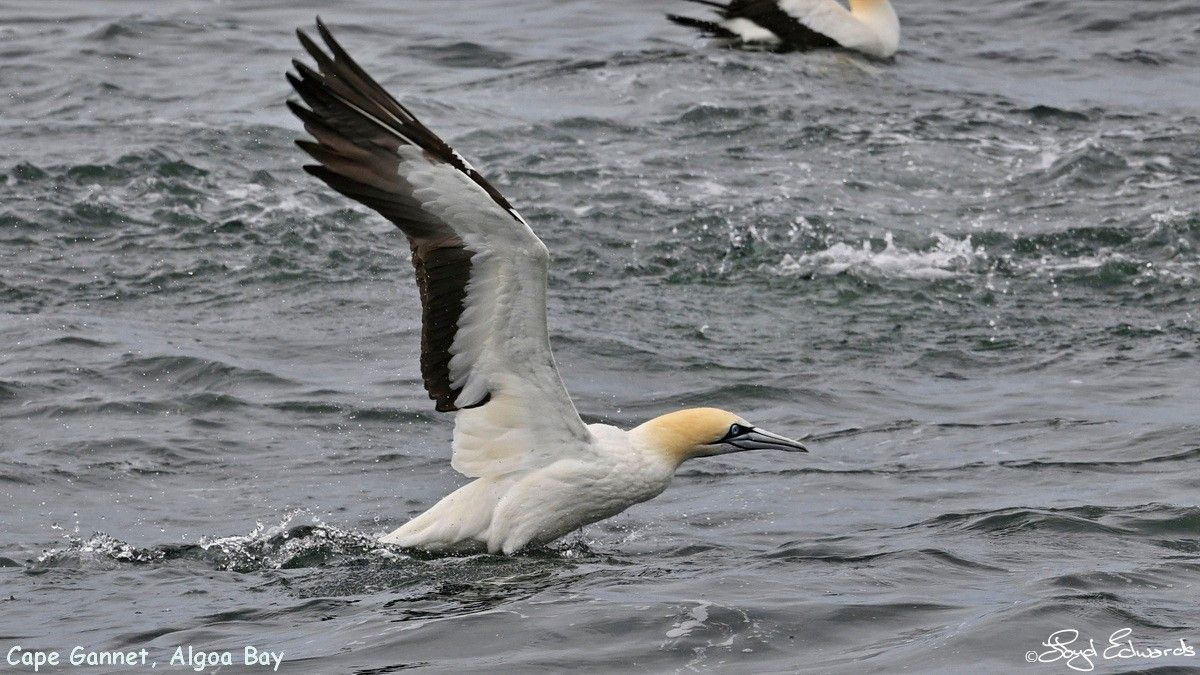
They spread those large wings to get airborne and join the back of the que.
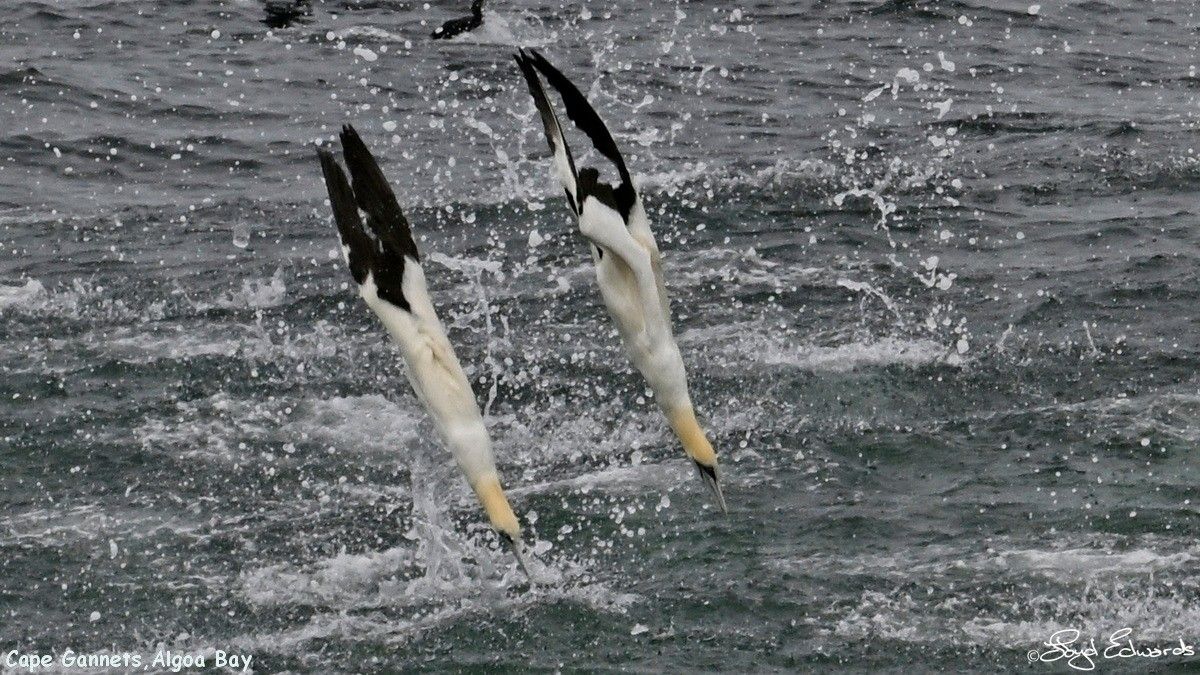
All appendages tucked away prior to hitting the water. Seeing as they can reach 100km/h, I should have been shooting at a shutter speed of higher than 1/1600th second . . . next time!
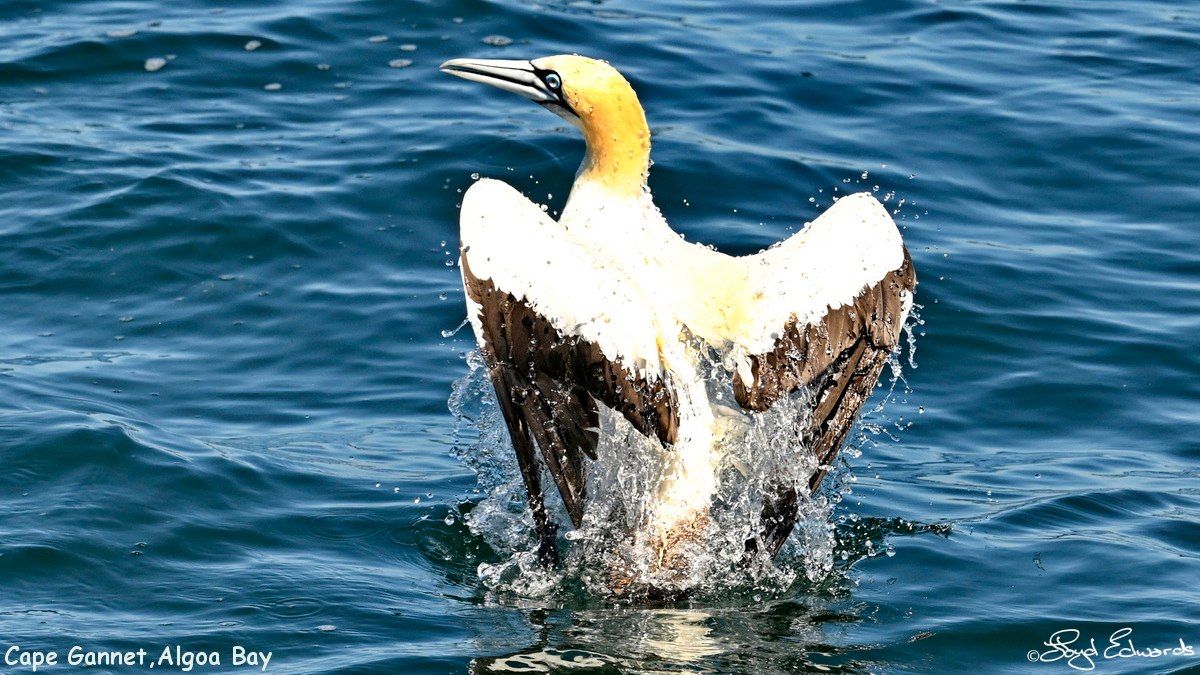
This one didn't stop at the surface!
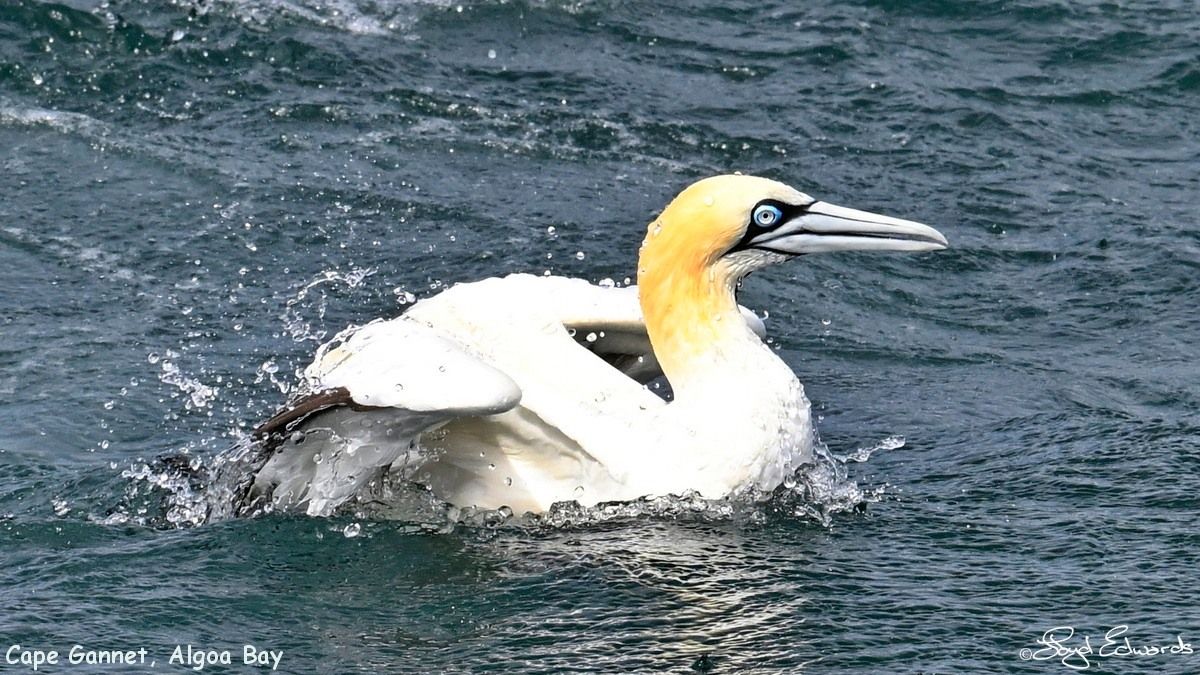
Just have a look at the strength of that deadly beak . . . the ultimate killing attachment!
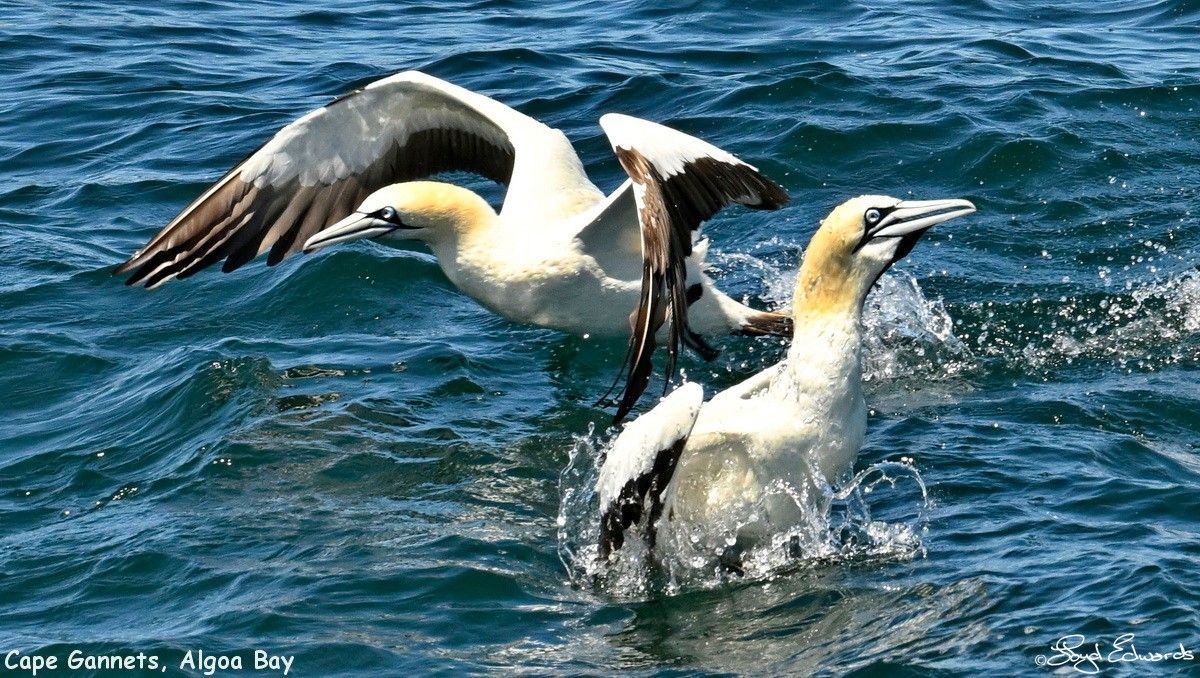
You can see the fish going down the throat in the one on the right.
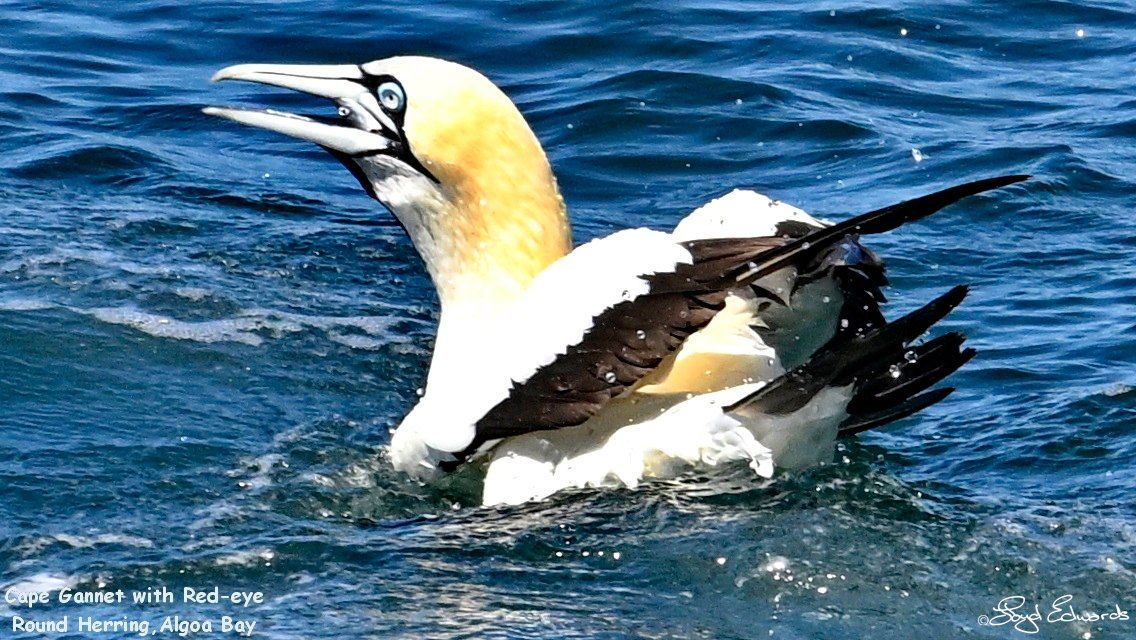
Just the fish's eye and head are visible. According to Prof Nadene Strydom, the fish is probably a Red-eye Round Herring. Some people thought anchovy, but the eye was not quite right.
The reason we doubt this fish was a sardine, is because the bait balls were not stationary as they normally are with sardines. They just kept on moving.