The Bryde’s Whales of Algoa Bay
By Lloyd Edwards
Wednesday, 13th August 2025People on my boat often ask me what my favourite marine animal is. I have no hesitation in saying the Bryde’s whale and especially during the sardine run when they are feeding. Observing the feeding frenzies is just right up there, which is why we have so many film crews capturing this behaviour.
Bryde’s whales are the largest resident baleen whale species along the South African coastline. Unlike the Humpback and Southern Right whales, they do not need to migrate to the Southern Oceans to feed. They do make small local migrations in search of prey. For a 20 ton and up to 14 metre animal, they are extremely fast swimming and easily catch their main diet of sardines and anchovies. They are also known to feed on mackerel, saury and this year karanteen.
Recent deployment of camera tag data loggers in South Africa, has revealed different foraging techniques. There are slow lunges at various depths. Neutral lunges at 40 to 100m, with high initial speeds while moving vertically. Ambush lunges in shallow water less than 30m, with fast acceleration where the whale breaks the surface. These are the ones we often observe, but it is nice to know that they employ other strategies as well.
Bryde’s whales occur in tropical and sub-tropical areas across the globe. Some of the populations have been split into different species, and with more research, this is likely to increase. The South African population is estimated at less than 1000 individuals, and therefore classified as vulnerable. They are affected by over-fishing, ecosystem changes, ship strikes and entanglement in fishing gear.
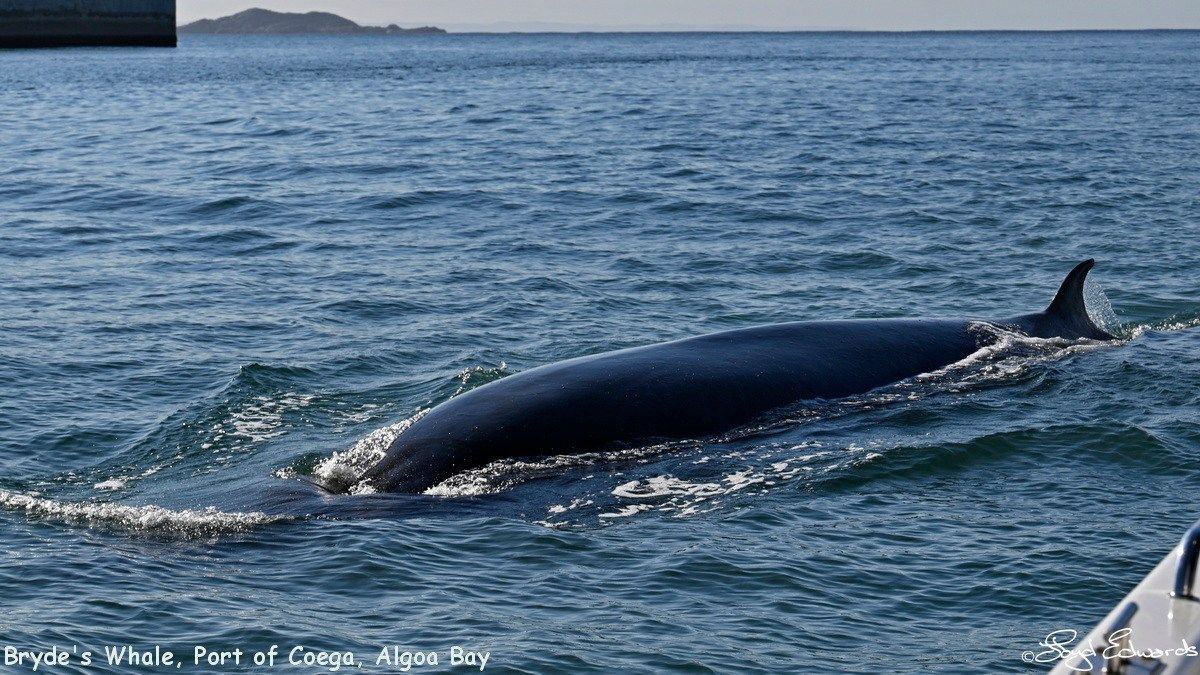
This chap surfaced right near our catamaran at the mouth of the Coega harbour. Taken with a Nikon Z9, ISO 200, 70mm zoom, f/9 and 1/1000th second.
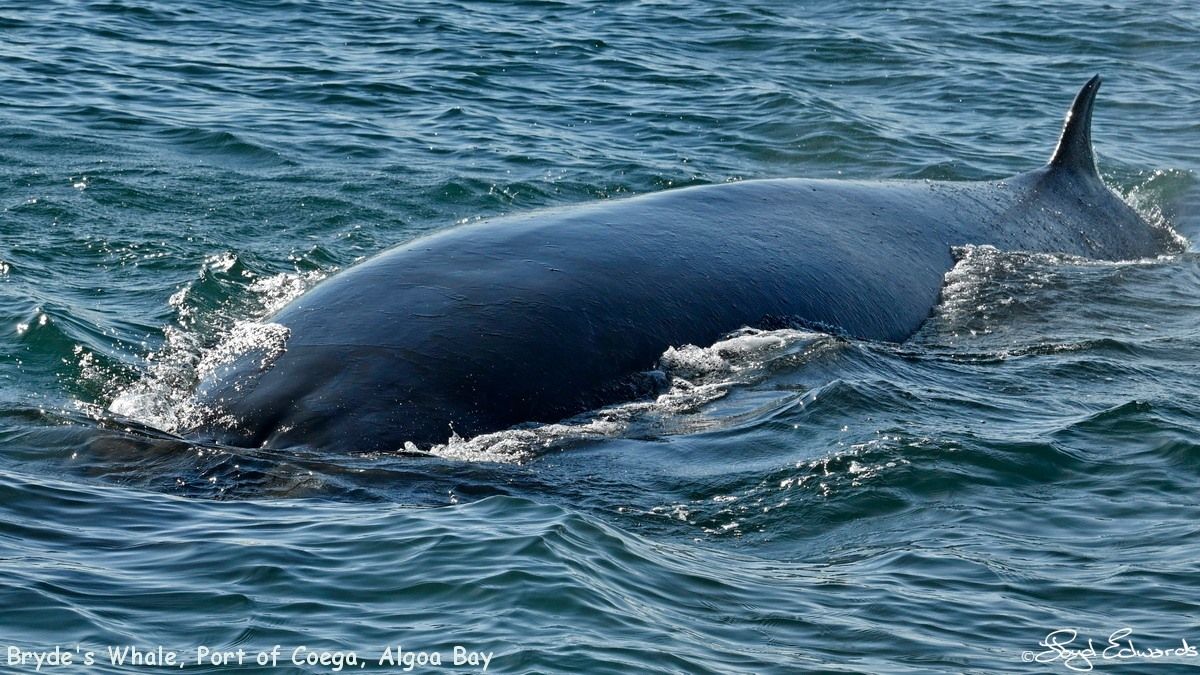
When the dorsal fin come out of the water, the blowhole submerges.
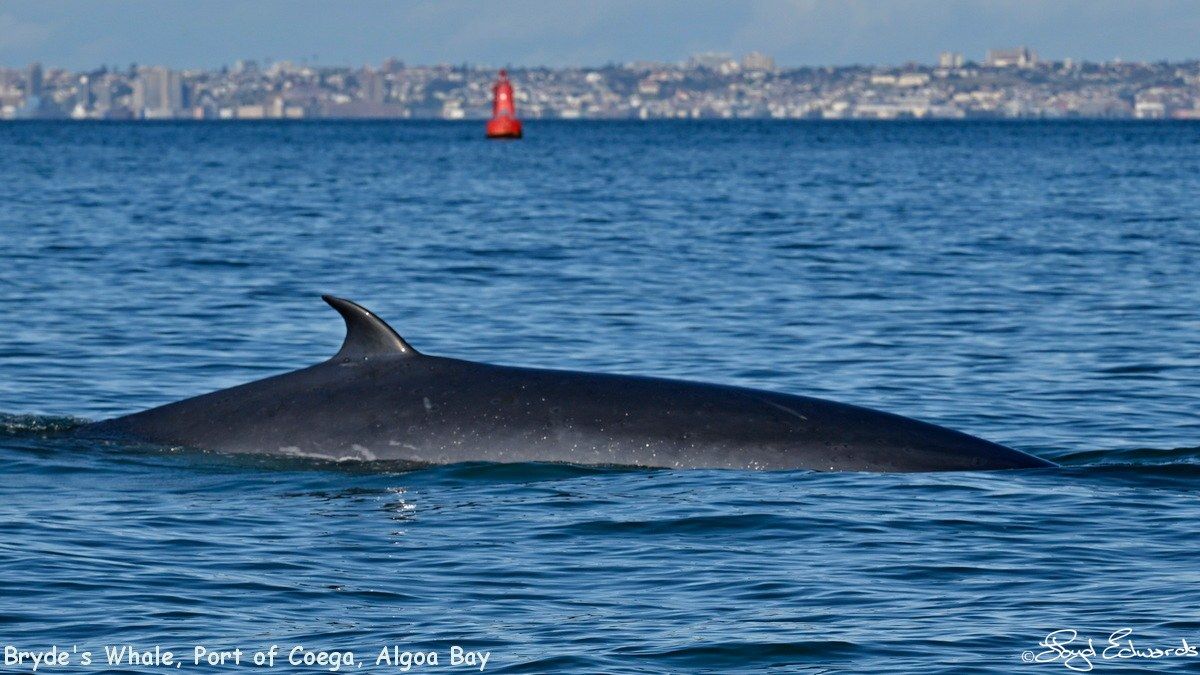
This one has been hanging around Coega for the last two weeks. We know this because of the shape of the dorsal fin. Like a fingerprint, ever individual is different.
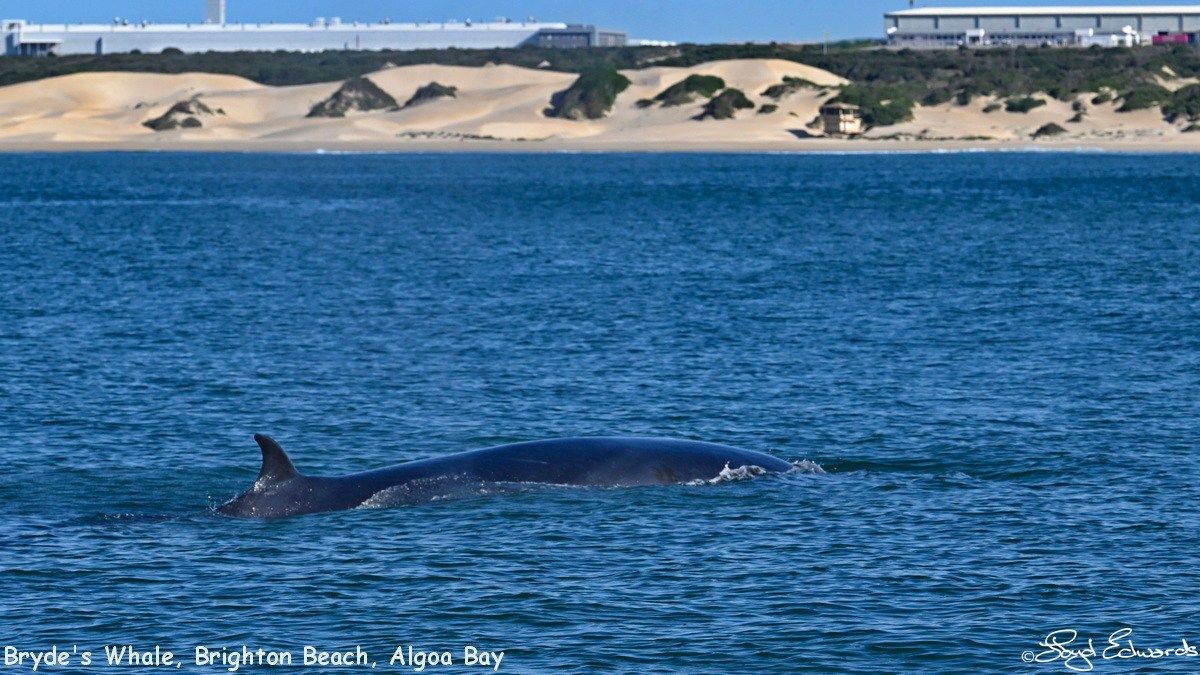
We don't often find them off Brighton Beach, but the baitfish have been very shallow this year.
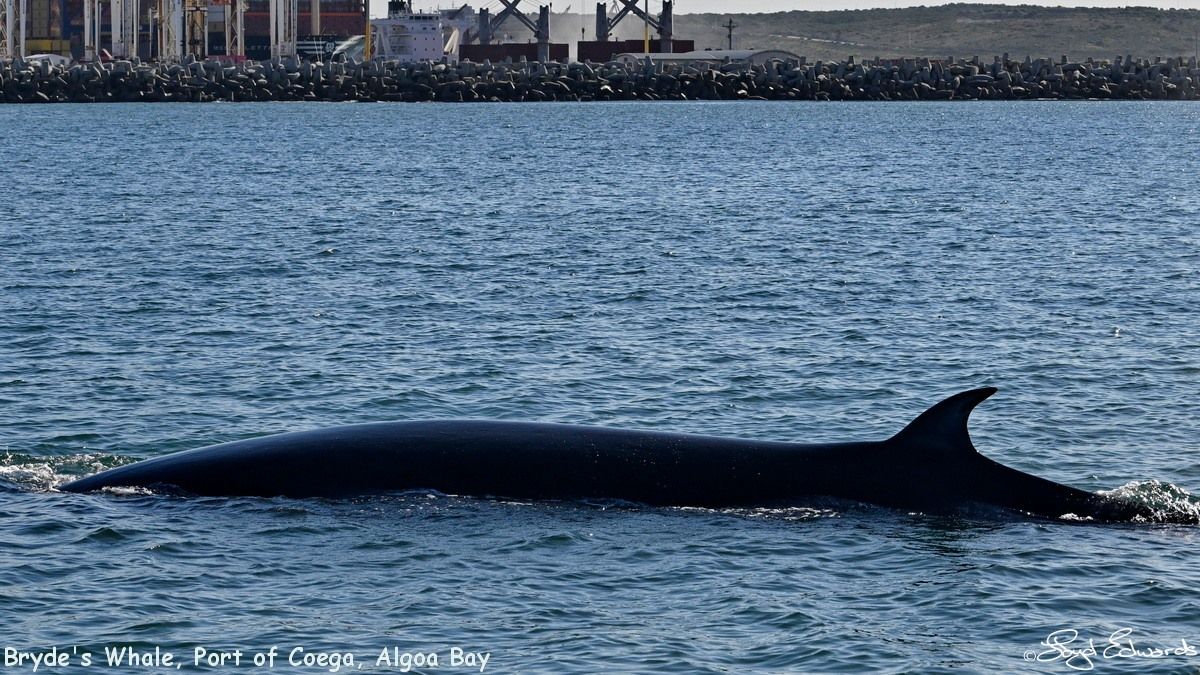
With so much noise pollution generated by the port, one wonders how this animal manages to feed.
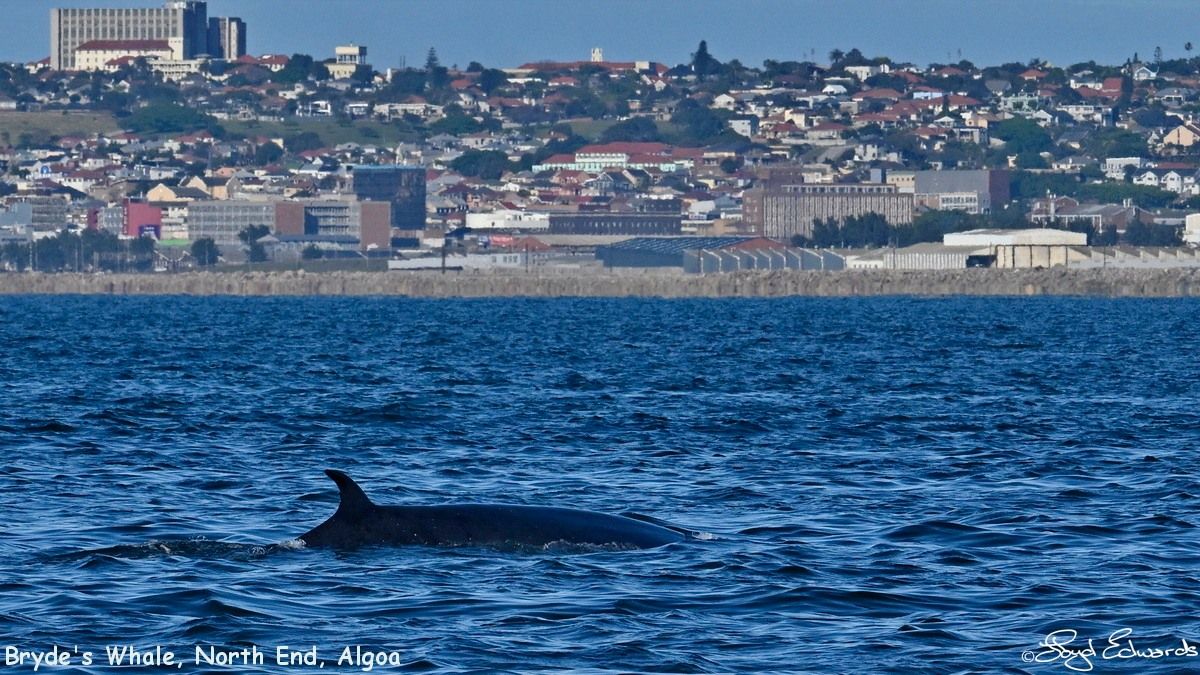
Lovely to see our resident whale in front of the city.
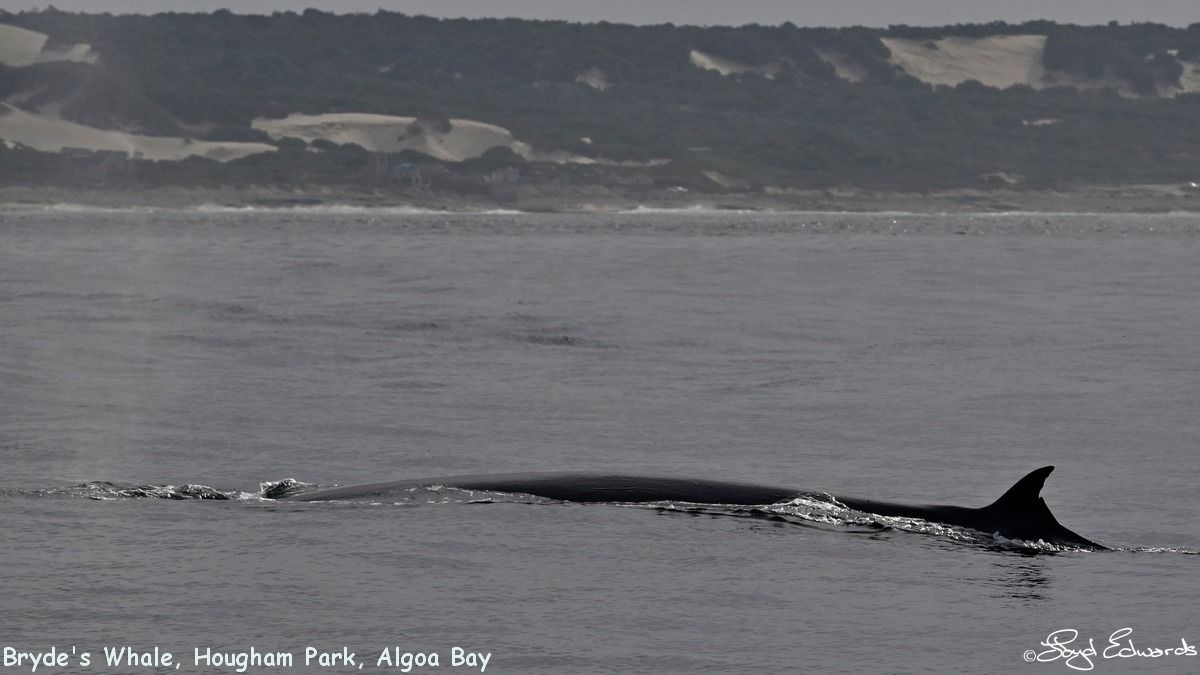
Note this ones dorsal fin, with those nicks out of the trailing edge, it is very difficult to miss.
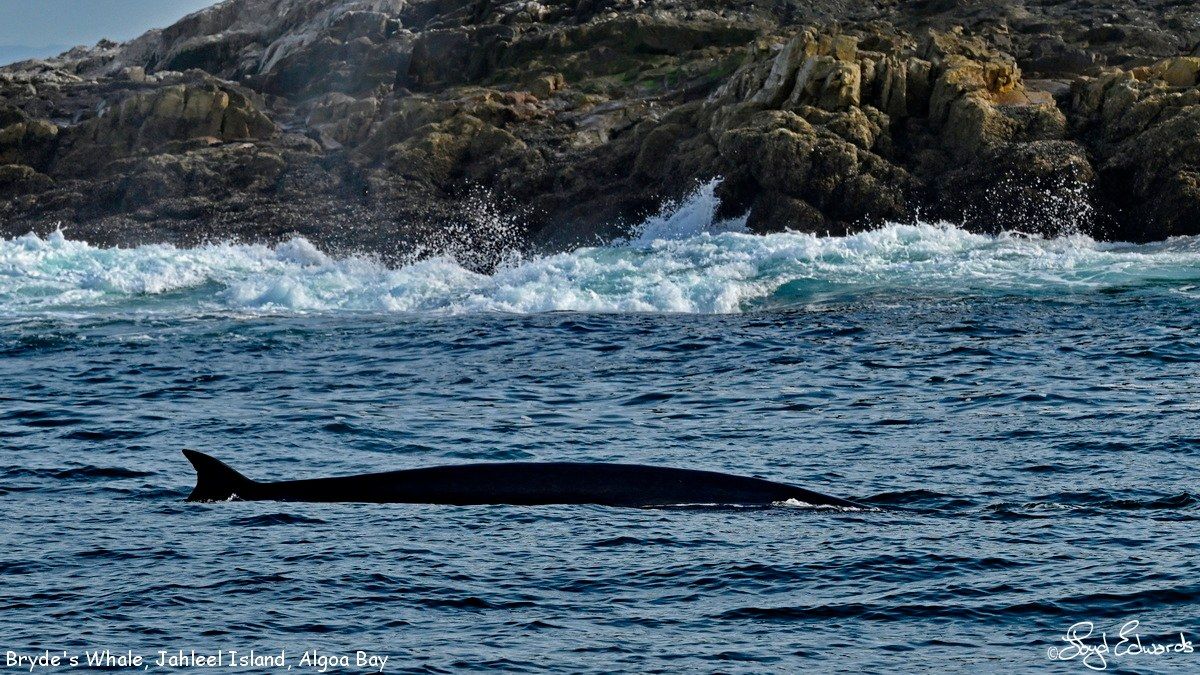
Jahleel Island is presently home to a large breeding colony of Sacred Ibis now that there are so few penguins on the island.
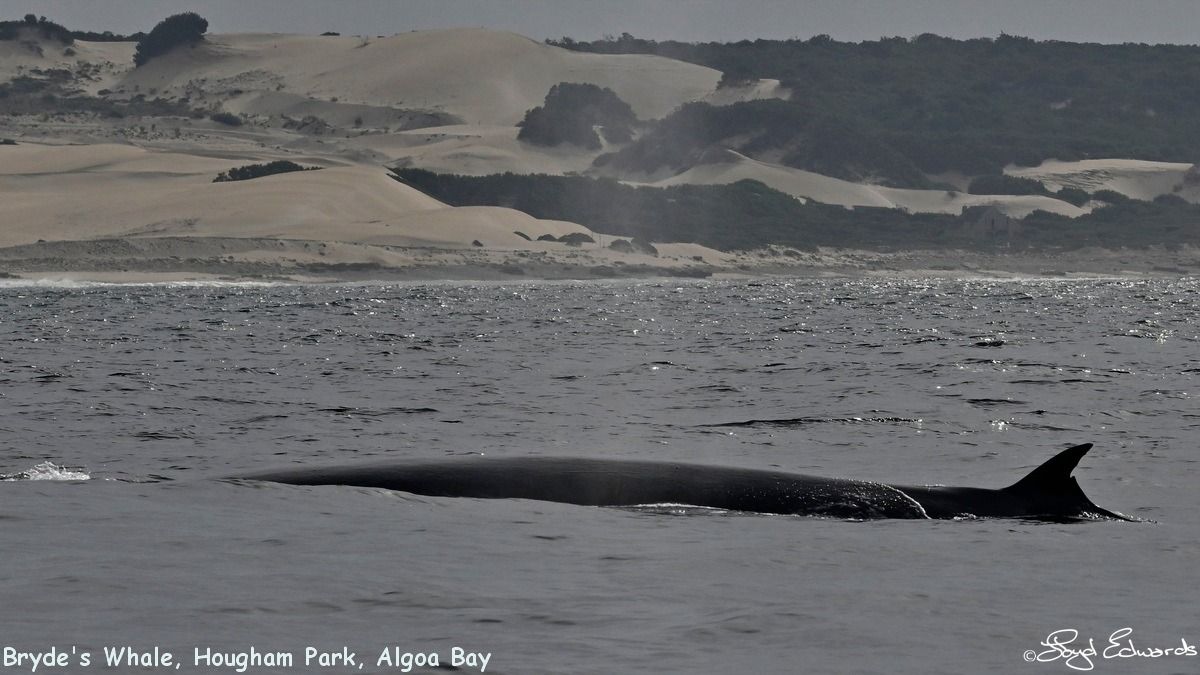
Lovely to catch this one against the backdrop of the Skelm Hoek dune fields.
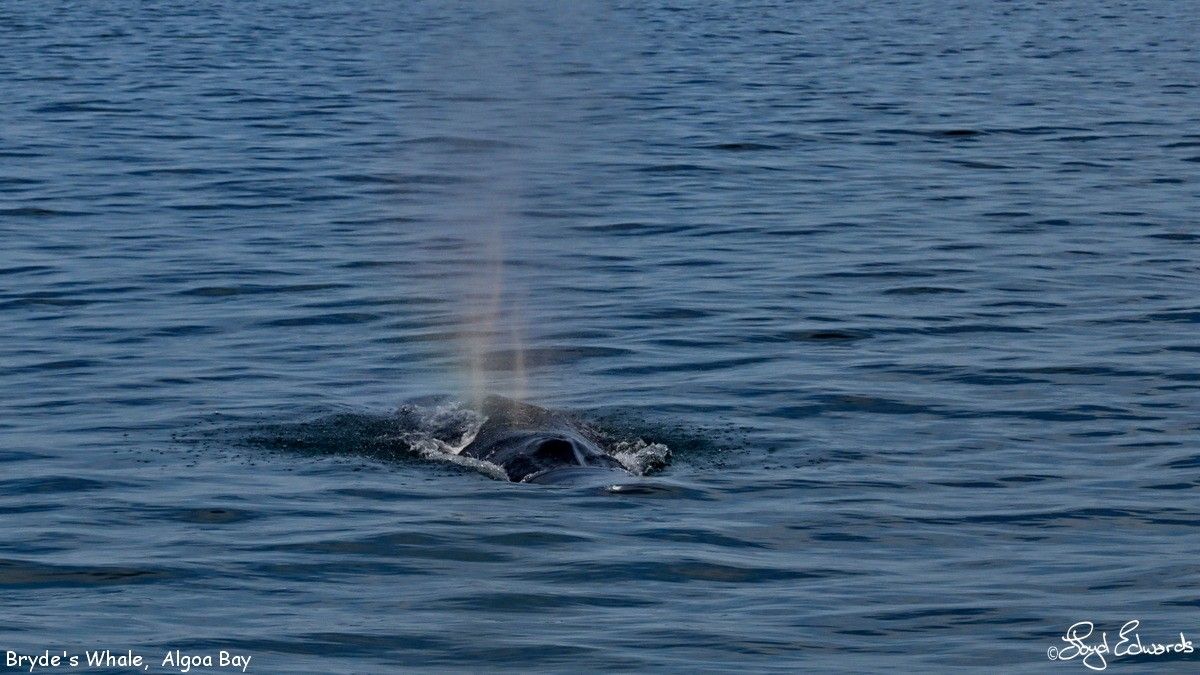
The Bryde's whale has 3 longitudinal ridges on the rostrum which differentiates it from other rorquals. Here only the start of the middle one can be seen.