Whale Entanglements in active fishing gear has to stop.. we have turned to our Minister for help.
By Jake Keeton
Wednesday, 3rd September 2025Every year, numerous migratory humpback whales are entangled in active fishing gear along the coast of Southern Africa. Thanks to observant members of the public, and well-trained response teams, some of these entangled whales are cut free of their deadly restraints. Unfortunately, most of the entangled whales are only seen by the public when it is too late and the whale is washed up dead on the beach. Fishing gear entanglements currently account for the majority of whale mortalities, with a lower percentage from ship strikes. Whales that get entangled in fishing gear suffer a prolonged and gruesome death, eventually succumbing to exhaustion and starvation. This can take months or even years.
Ghost nets (discarded, free drifting fishing gear) have been a topic of discussion around whale entanglements for many years. The topic we would like to bring to everyone's attention is that whales are being entangled in active fishing gear.
The fishery in question is the commercial West Coast Rock lobster fishery. In this fishery, vessels deploy a series of baited traps with heavy weights at depth on the ocean floor (see below images). These traps are all connected by ropes that lie near the ocean floor. Then at each end of the line of traps there is a rope going up to two marker buoys on the surface. The traps are left at sea to fish or "soak" for an average of 22 hours before they are hauled up and emptied. The traps are then either re-deployed or moved to another location.
The risk of entanglement is highest while the gear is fishing. The best fishing takes place between 100 and 200 meters of depth. South of Port Elizabeth you will reach this depth of water when you are between 4 and 15 miles from shore. This zone happens to be where most of the migratory whales choose to use whilst migrating along our coastline. You could call it a highway for the whale migration.
As the whales swim, dive and play they get entangled in these ropes. The distress and misery inflicted on the whales would never be tolerated if it happened to a land animal in plain view of the public. Is this a matter of out of sight out of mind?
Thankfully there is a better option, Ropeless fishing!
Ropeless fishing technology has been developed and adopted in other fishing industries around the world. The results of this change have drastically decreased the number of whale entanglements. The best example in our waters is the adopting alternative methods in a fishery was in the Octopus fishing industry. This fishery was having the challenge of regular entanglements of Brydes Whales in their gear. Thankfully our previous Minister of environment, forestry and fisheries, Barbara Creecy temporarily suspended the fishery and consulted with stakeholders to address concerns. Since the implementation of alternative methods in the Octopus fishery there has not been a single report of a whale entanglement in the gear used for this fishery.
How does ropeless fishing work?? To put it plainly, with ropeless fishing, the rope needed to haul the traps is stored in a coil that sinks to the ocean floor with the traps. When the fishing vessel wishes to retrieve the traps, it sails over the area and uses an acoustic signal to release the coil of rope with a buoy that floats up to the surface.
Using this method means that there is no risk for the whales as they swim above gear that is actively fishing.
There are more benefits to ropeless fishing. Aside from reducing whale entanglements. Ropeless fishing protects fishing gear from damage from marine life or ships. It reduces the possibility of gear conflict and poaching within the fishery. Ropeless fishing also improves the safety and efficiency of fishing vessels as there are less ropes to handle on deck.
On 3 September we were invited to attend an environmental stakeholders meeting held at a venue on the beachfront. Our Minister of environment, forestry and fisheries Dion George was in attendance at the meeting and we as Raggy Charters were afforded a ten-minute time slot to close the meeting and present the minister with a gift. Purity and I attended as Lloyd was in Sri Lanka looking into the issue of ship strikes that are impacting Sri Lanka’s resident population of Blue Whales.
We decided to take this opportunity to bring the issue of whale entanglements to the Minister’s attention. We first highlighted how many whales are being entangled with the current fishing methods. We went on to explain how the alternative option of ropeless fishing has been so successful in eliminating entanglements in other fisheries in South Africa and other countries around the world.
We made a clear request of the minister. We have asked him to establish a task force, or steering committee of the relevant researchers, conservationists and other stakeholders to facilitate the industry-wide adoption of ropeless fishing in our rock lobster fishery.
To end off the meeting we presented Minister George with a very special parting gift.
The Minister received his very own pair of Waterhaul Sunglasses, made from recycled 20mm nylon rope that was removed from an entangled humpback whale in Algoa Bay. These glasses are the result of a collaborative effect by Waterhhaul, the World Cetacean Alliance, NSRI Station 6 Port Elizabeth and Raggy Charters. Read more about Waterhaul and their Rescue to Recycle project.
We hope that this gift serves as a daily reminder to Minister George. A reminder of the countless people out there from private individuals to NGOs that dedicate their lives to conservation. And as passionate as these individuals may be, the success of their projects depends on backing by Government legislation.
Whale entanglements has been a long-standing project of Raggy Charters and the Baywatch Project, with owner and founder Lloyd Edwards first tackling it eleven years ago.
Being afforded the opportunity to bring this matter to our new Minister’s attention is an opportunity to finally make some headway in taking a proactive approach to stopping whale entanglements.
Please sign and share our "no more ropes" petition on our website. The more public awareness and backing we can muster the better chance we have for new legislation.
We also gifted the minister with an A1 canvas image of a raft of endangered African Penguins swimming in Algoa Bay. An indicator species that is in dire need of protection.
Thank you for reading and supporting our cause. Together we can create a safe whale migration route.
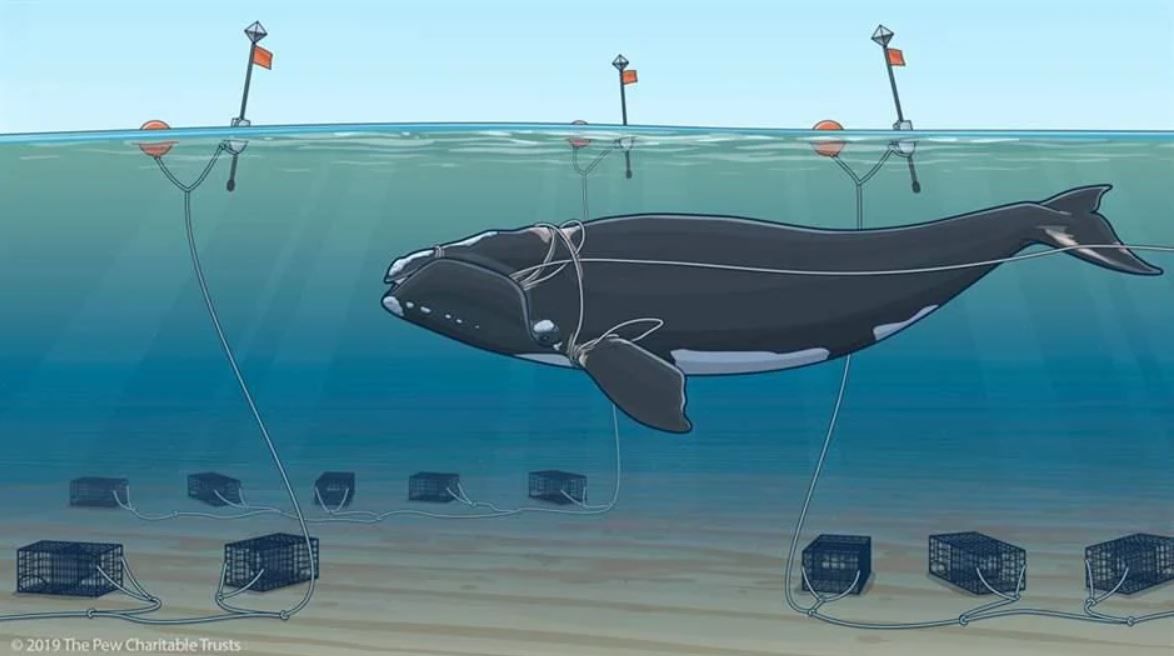
Rock lobster fishing gear accountable for the majority of whale mortalities. (image ref: sustainablefisheries-uw)
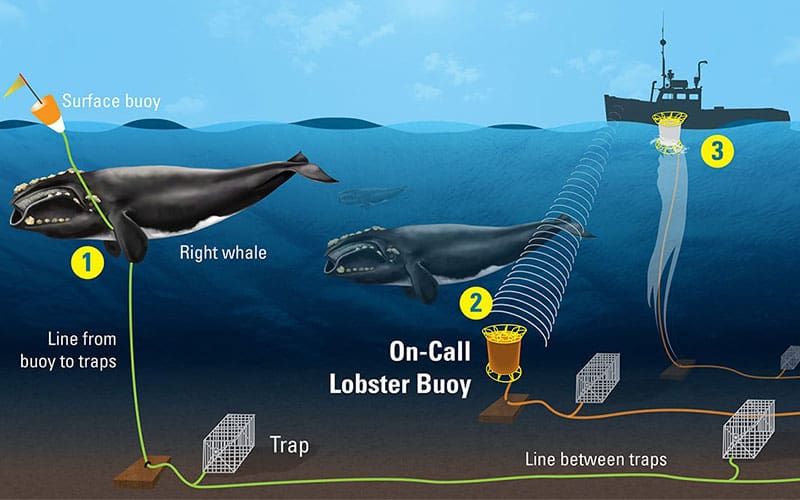
Image showing how ropeless fishing gear can eliminate the risk of whale entanglements. (image ref: clf.org)
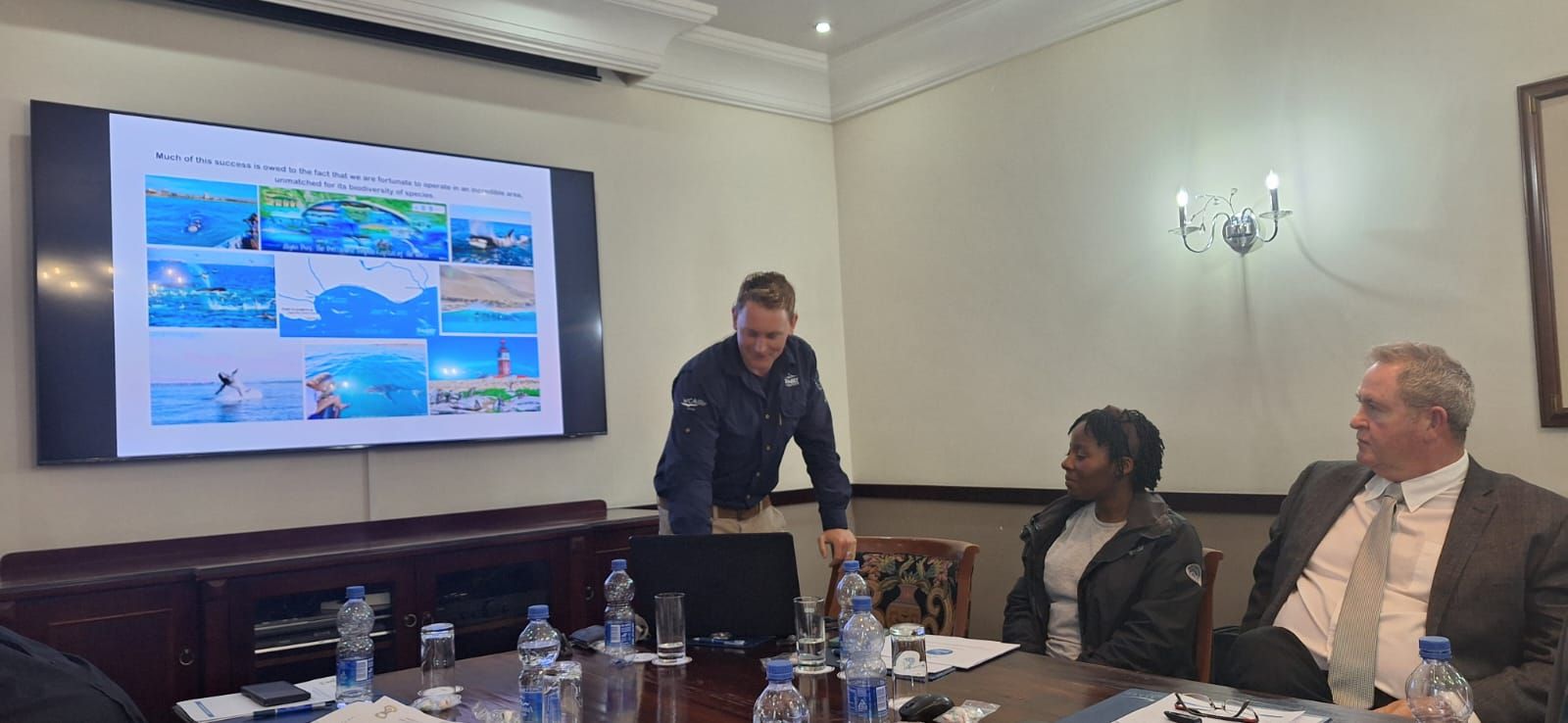
Presenting the entanglement problem to the Minister and environmental stakeholders.
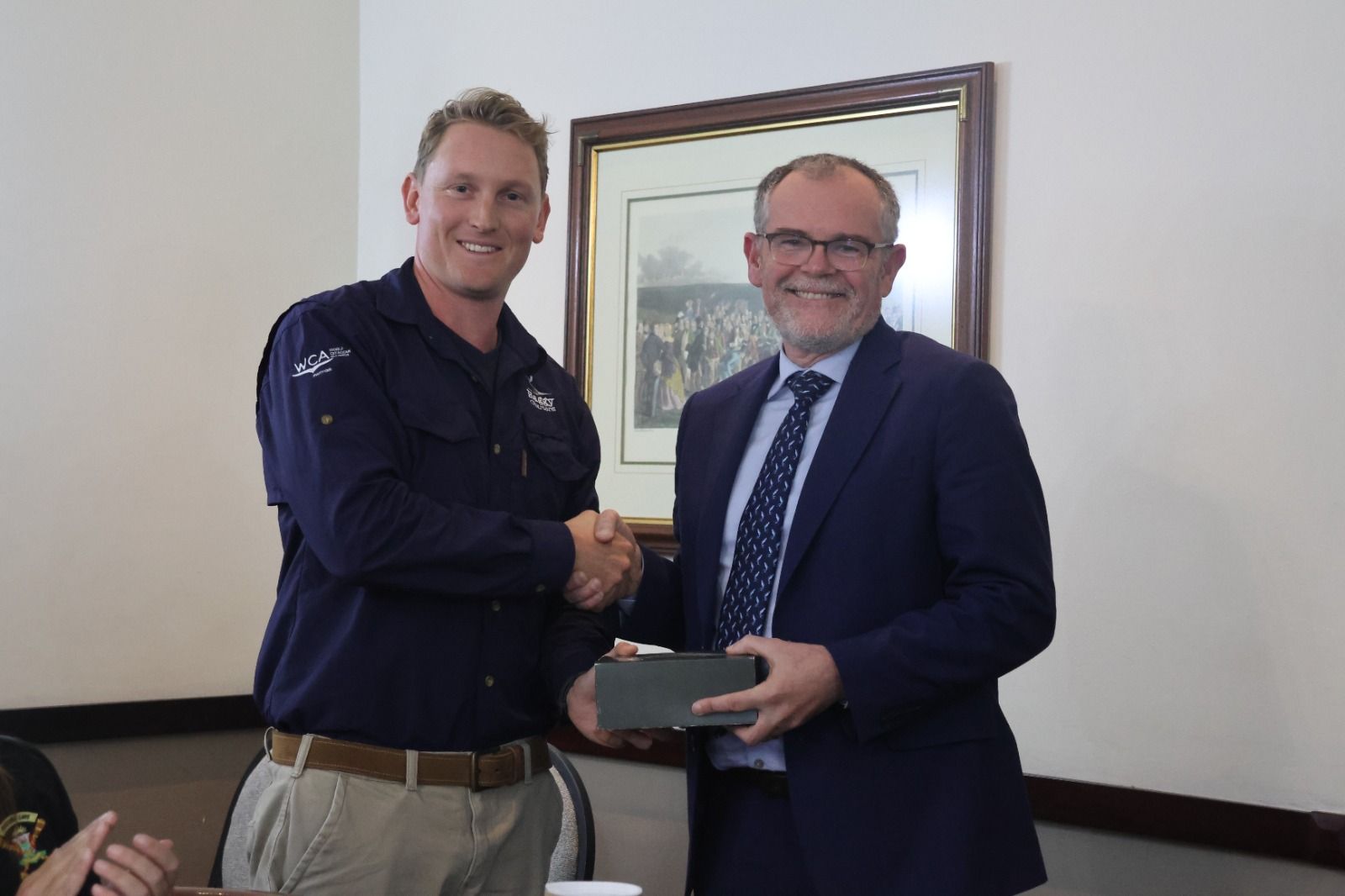
Jake presenting Minister Dion George with his pair of Waterhaul recycled sunglasses.
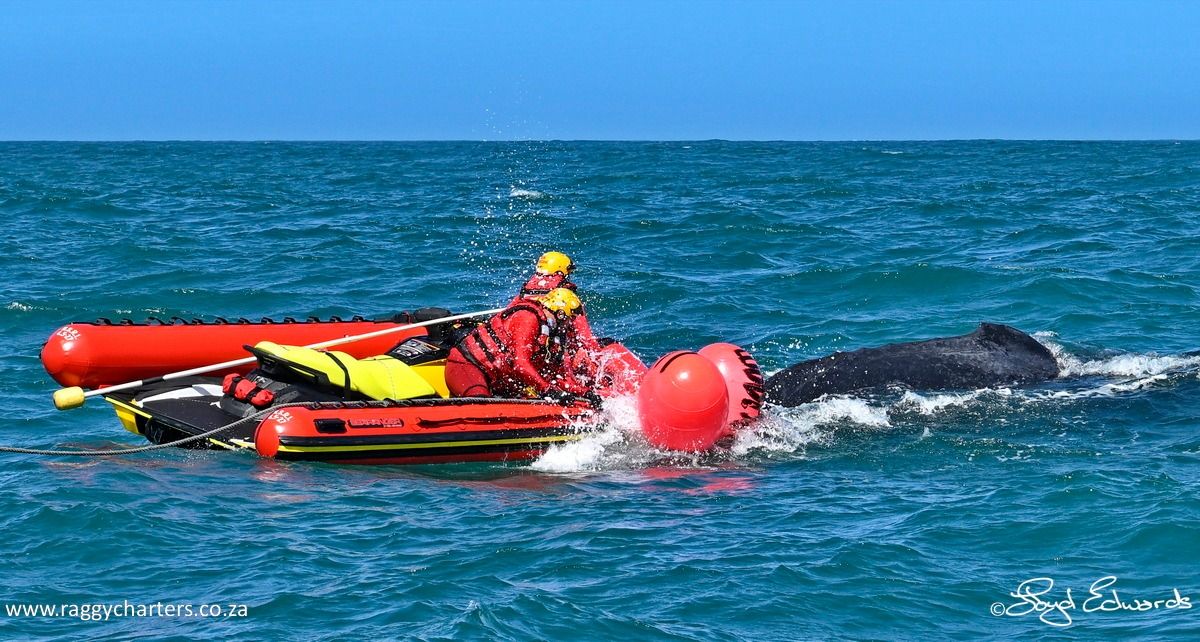
The entanglement underway by the NSRI Station 6 Gqeberha team.
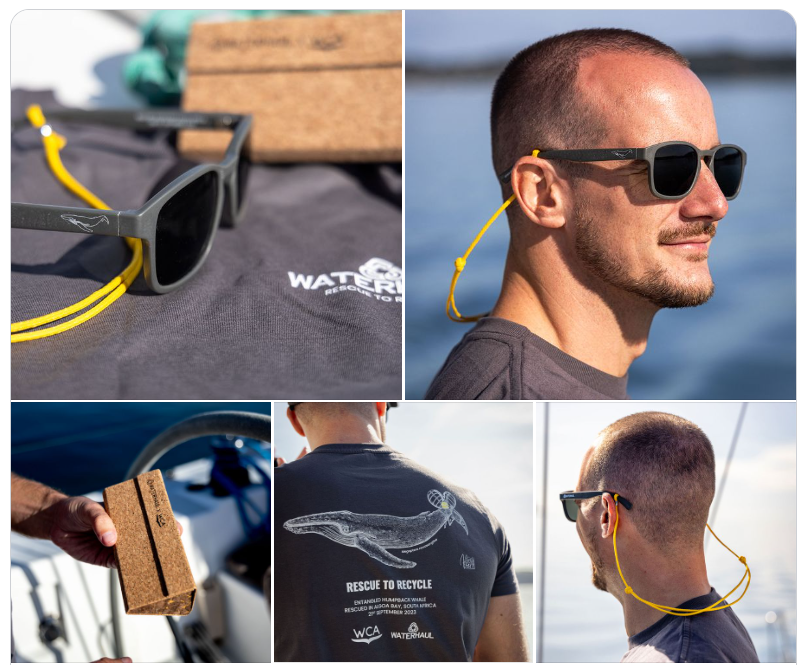
Waterhaul's sunglasses made from the fishing gear recovered from 'Miki' the freed entangled whale in Algoa Bay.
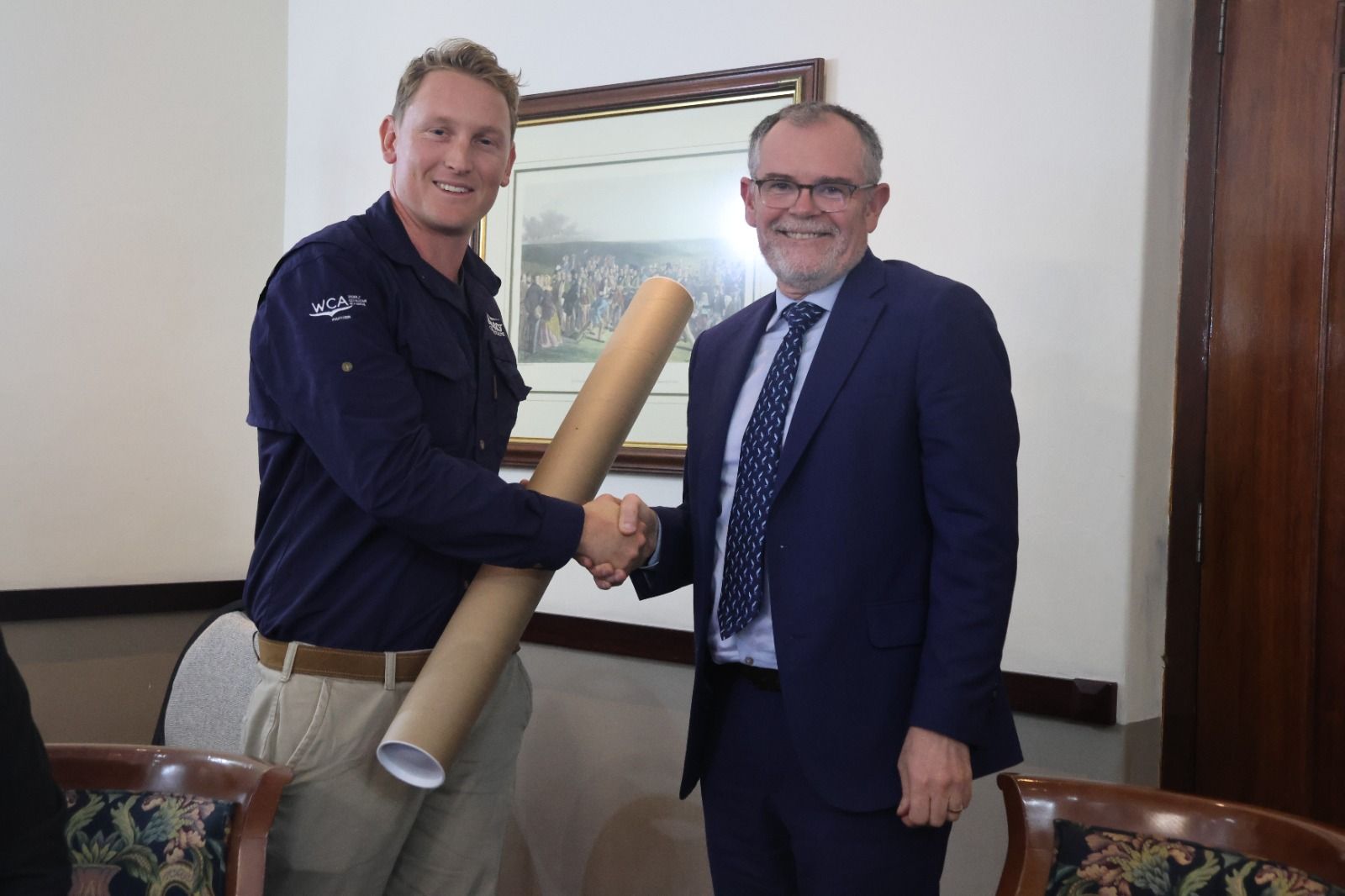
Jake presenting Minister Dion George with an African Penguin image taken by Lloyd recently in Algoa Bay.